Books I Wish I’d Written: 2012

As I explained last year, my year-end list of books is not a best-of-the-year list, or a most-under-rated list, or a most-over-hyped list, or any of those other lists you see out there.  I’ll let the experts put those out.  Instead, my list is very personal, and this year very brief.  Not because I didn’t read some great books in 2012 (though I didn’t fall in love with many, I have to admit).  But because there just weren’t that many that made me want to give away everything I own to have written them.

Neither of the books on my little list was even published in 2012.  One I read early this year, one I just finished.  One is a collection of short fiction, one a novel.  The thing they have in common, though, is that they are the books that spoke to me, that resonated in my soul.  Written the way I want to write one day.  They are my goal to reach for, my holy grail of writing.

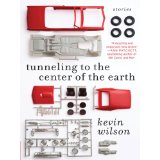
1)      Tunneling to the Center of the Earth, Kevin Wilson. Last year Wilson’s book Family Fang was at the top of my “wish I’d written that” list.  This year it’s his older collection of short stories.  While there is a feeling of sameness about some of the stories, I think the book as a whole rises above this complaint.  I’m not sure what it is about his work that I am so drawn to.  Maybe it’s because, as I said in a previous post, his stories are quirky and funny, often strange and sometimes sad.  But they are also kind – it’s obvious he has great compassion for his characters.  Something all writers should remember.
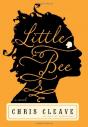
2)      Little Bee, Chris Cleave.  This book was published four years ago or so, and I never read it because, for some reason, the cover turned me off.  Thanks to Nancy Lauer for giving me her copy and telling me I had to read it.  That’s what’s so great about having bookish friends – they introduce me to books I might never have read without their recommendations.  Little Bee is one of those, and I’m really grateful.  The writing is beautiful, the characters so memorable, so real, the story itself so heart-breaking and yet somehow hopeful.  Here is, once again, an author who cares deeply about his characters.  There is great depth of emotion here but without melodrama, and multi-layered characters who are neither all good nor all bad but a mass of contradictions, as most humans are.  That’s what I’m reaching for in my own work.
Both of these books have humor and tragedy, sadness and hope.  What more can we ask of literature?
Recent Reads

Well, it’s been 6 months since I posted what I’m reading or have just read, so thought I’d share that with you this week.  As I’ve said before, don’t expect reviews here.  Just gut reactions over my recent reads.

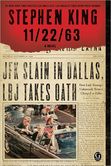
  • Best book I’ve read lately:  11/22/63, Stephen King.  I’m not usually a big Stephen King reader – I’m just not into horror or scary stuff.  But this book is time travel, and OK, I have to admit it.  I love time travel books.  When they are done well, that is.  Stephen King is the master of plotting, and he did this well.  It didn’t need to be 850 pages (I got muscles in my forearms from holding the damned thing up) but it was a fun read, and I was engrossed almost all 850 pages.

11.22.63

  • Book I couldn’t finish:  The City & The City, China Mieville.  I’m going to go back to it at some point, but I didn’t get far into it because my mind kept wandering.  I think it was the names mostly – felt like I was reading Tolstoy without the payoff.  Like I said, I barely got into it, so I’m going to try again, give it at least a couple more chapters.  Then, if I still can’t get into it, I’ll give up.
  •  Book I’m reading now:  I just started Train Dreams, the novella by Denis Johnson.  Given how short it is – 116 pages – I should be able to finish it pretty quickly.  I’ll let you know what I think soon.

  •  Next on my “to be read” list –  Novel:  Little Bee, Chris Cleave.  Can’t believe I still haven’t read it.  Thanks for the loan, Nancy, and I’ll try to be finished with it before I’m back in C’Ville.
  • Next on my “to be read” list – Short Fiction:  There are several short story collections I am dying to get my hands on.  George Saunders, who many agree is one of the great American short story writers of our time, has a new one coming out in January, Tenth of December.  I adore his work – his characters are funny and odd and interesting, and his stories have emotional resonance long after reading them.  Another George, George Singleton, has a new collection out now, Stray Decorum.  George is an amazing southern writer whose characters are the people I grew up with.  In fact, he lives not far from where I grew up in upstate SC with its strip malls and industries and dying little towns. He totally gets the people who populate his stories, and I do too. Last, but certainly not least, is Alice Munro’s new collection, Dear Life.  Alice Munro leaves me breathless with her prose and her storytelling gift.

  • Book I’m going to reread soon:  Still Anna Karenina, Tolstoy.  I’d planned to do it much earlier, but haven’t gotten around to it yet.

I have to say, I haven’t read a book in a while that blew me away.  In fact, several novels that I’ve read over the past few months were over-hyped, disappointing and predictable books that I wished I hadn’t wasted my time finishing. You’ll have to figure those out for yourself – I don’t like to trash other writers’ works.  But if you know of something I absolutely have to read, please let me know.  I want to be blown away.

Mental Archeology

This week I had an email conversation with a college boyfriend I haven’t spoken to in years. (OK Greg, I warned you.  Writers use everything.  You are now in my archives.)  That got me thinking about how our past informs our present and our future, how as a writer everything I’ve ever experienced is in my work whether I mean for it to be or not, whether I realize it or not.  Little things, like the crooked smile of someone once in my life, or big things, like the day my father left.  Sweet memories of citizenship awards and hurtful ones of being teased for wearing glasses when I was only in kindergarten.   Encouraging words from my second grade teacher about a story I had written, and harsh ones from the third grade teacher who made me stand in a closet until I almost wet my pants.  It’s all there, somewhere, in the story of the little girl who is afraid of basements, or the boy who is bullied, or the man whose wife leaves him.  In the sun glinting off the water like broken glass, in the acorns crunching under tires echoing those in the driveway of my childhood home.

I think writing is a sort of mental archeology.  You dig for artifacts, most often not knowing exactly what you’re looking for, but gently dusting the dirt from memories, bringing them into the open for others to see.  Usually you have no idea yourself what you’ve found, only that it looks interesting and might be something special.  A smell, a sound, a song.  I try not to think too hard about the context of the memories, only the feelings they invoke.  To me the memories serve not to tell my story, but to tell a universal story, a story that others can connect with.

Because who really cares about my dad leaving, or my citizenship award, or that I listened to James Taylor and Jimmy Buffet and David Bowie in college?  But give me a character and a few of those telling details, and I might come up with a story much more interesting than my own.

The worst thing I can hear from a writer when defending something in workshop is “but it really happened.”  If I want to read a memoir, I’ll read a memoir.  And it better damned well be interesting.  But if I want to read fiction, I want a story, not an autobiography.  While I believe that we use everything in our past as material, it should be used as atmosphere, not the story itself.

So dig deeply, but carefully, and treasure what you unearth as unique material that only you have access to.  Just don’t bore me with the history of the artifact. Give me a story.