
“One’s destination is never a place, but a new way of seeing things.” – Henry Miller
MEX: Airport Hell and the Missing Passport
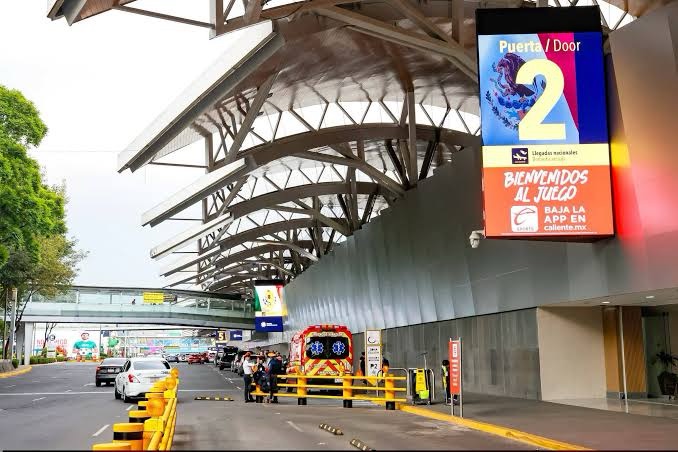
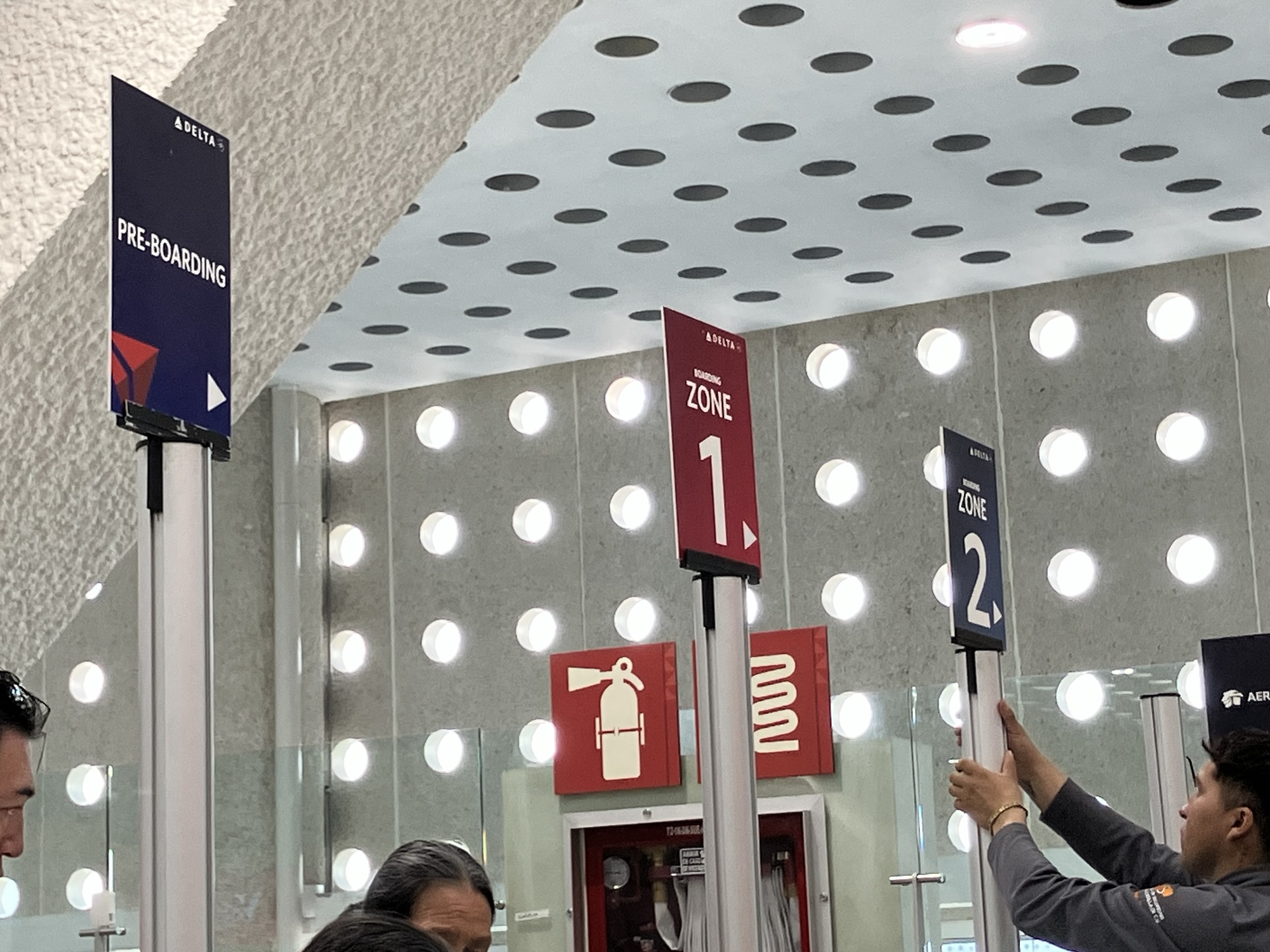
If you had asked me before yesterday, I would have unequivocally said the worst airport to travel through was ATL. Or maybe Miami or Houston. But they’ve got nothing on Mexico City International.
While Merída’s airport was small and easily navigated, MEX was the opposite: too small for the number of travelers, confusing, hot, and chaotic.
It began when we disembarked from the plane. As is the case in many airports outside of the United States, we climbed down the stairs and boarded a bus, which drove us across runways and through construction zones before finally depositing us somewhere near the terminal. With no one directing passengers, we were left wandering across the tarmac trying to find an entrance. Not exactly a reassuring welcome.
Once inside, I had to pass through three different security gates just to enter Terminal 1. There, I found only Aeroméxico flights on the arrivals and departures boards. Well-meaning people with very little English directed me through security again, and then once more toward Terminal 2. Only to discover that I should have been in Terminal 1 all along.
To be fair, a good deal of the blame belongs to me. I speak and understand very little Spanish, and neither the signs nor the announcements were in any other language. For some reason, I had expected an international terminal to make an effort to communicate in several languages. Very American of me, I have to admit. We do tend to expect people the world over to accommodate us in English.
But the language barrier wasn’t the only problem. Gates were scattered among the duty-free shops, with passenger queues lined up along windows and walls. This did keep the main aisles clear, but the gates themselves were often tucked into corners or hidden behind walls. And seating was in frustratingly short supply.
What should have been a leisurely two-hour layover with time for lunch turned into a marathon just to find my gate in time to board. By the time I finally located it, I was desperate for a drink and something to eat. And that’s when things went from chaotic to downright alarming.
Somewhere in the rush to grab a snack, I lost my passport.
I nearly had a panic attack. I retraced my steps to the little shop where I had bought a drink, and thankfully, there it was. It had fallen out of my purse, and the person behind the counter had been holding on to it.
I never lose my passport. But then again, I’ve never had to pull it out six times in the space of an hour. The last time, in my haste, I had shoved it into my purse without returning it to its proper place.
Let that be a lesson: always keep your passport in exactly the same place, no matter how rushed or frazzled you are. and check that it’s there before moving on. I was already in the boarding queue before I realized mine was missing.
A passport is your lifeline when traveling. You can survive a missed meal, a confusing terminal, even a frantic dash to the gate. But lose your passport, and suddenly none of those things matter.
At MEX, I learned that finding your gate isn’t necessarily the most important part of airport navigation. Making sure you still have your passport is.
Mérida – A City of Parks
There is so much to love about Mérida, Mexico: the beautiful architecture along Paseo de Montejo, the Mayan history, the wonderful food and even more wonderful people.
But what I have fallen in love with are its parks. Every neighborhood seems to have its own gathering place, with trees and benches and monuments. What makes them so special, though, is the life in those parks. Families gather, couples wander hand-in-hand, children play, and older people sit and watch the world go by.
The parks aren’t there waiting for tourists to arrive. They are waiting for the neighbors to come out and play. They are there for the locals to enjoy, from morning until late at night. They are woven into everyday life.
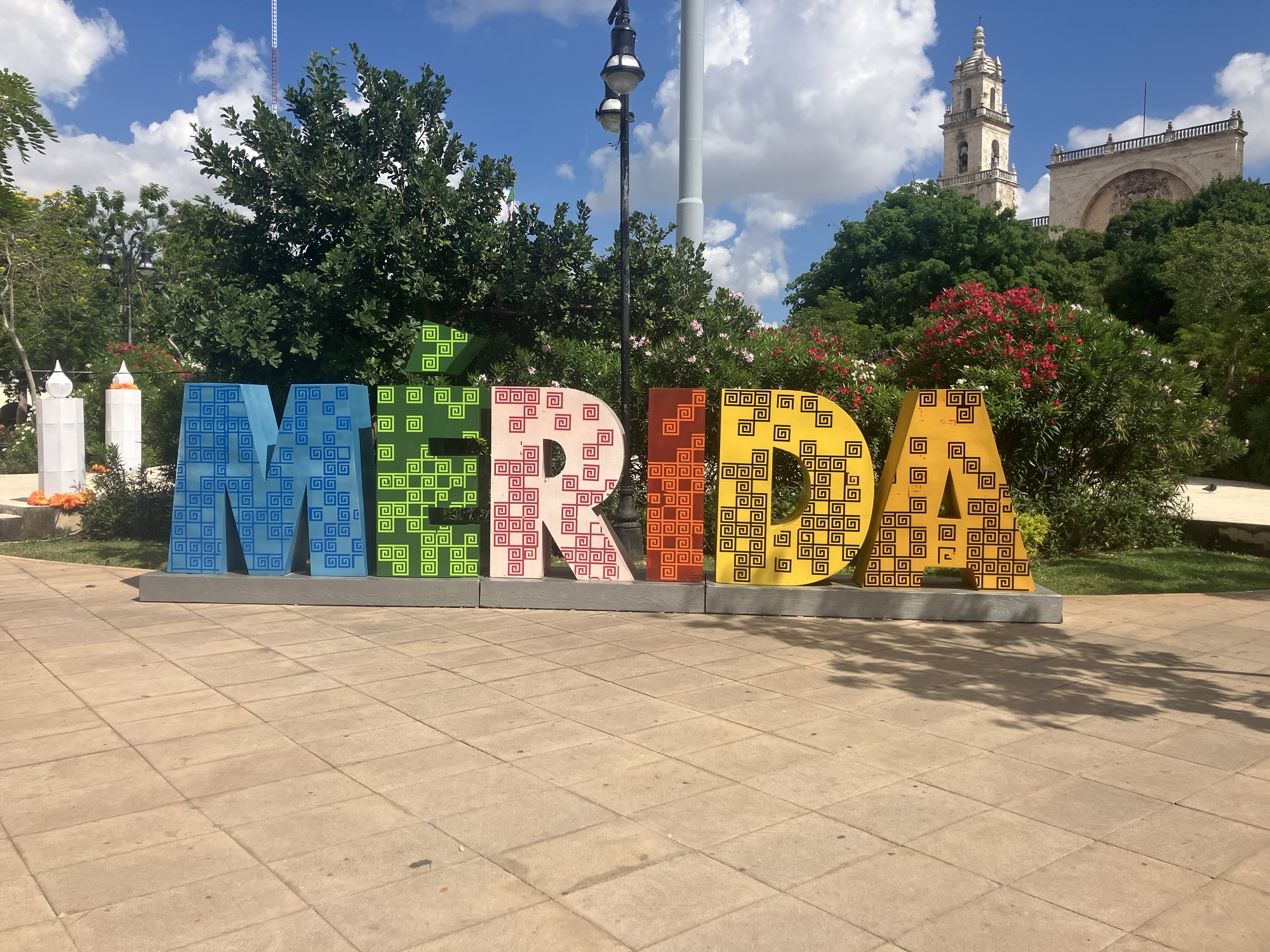
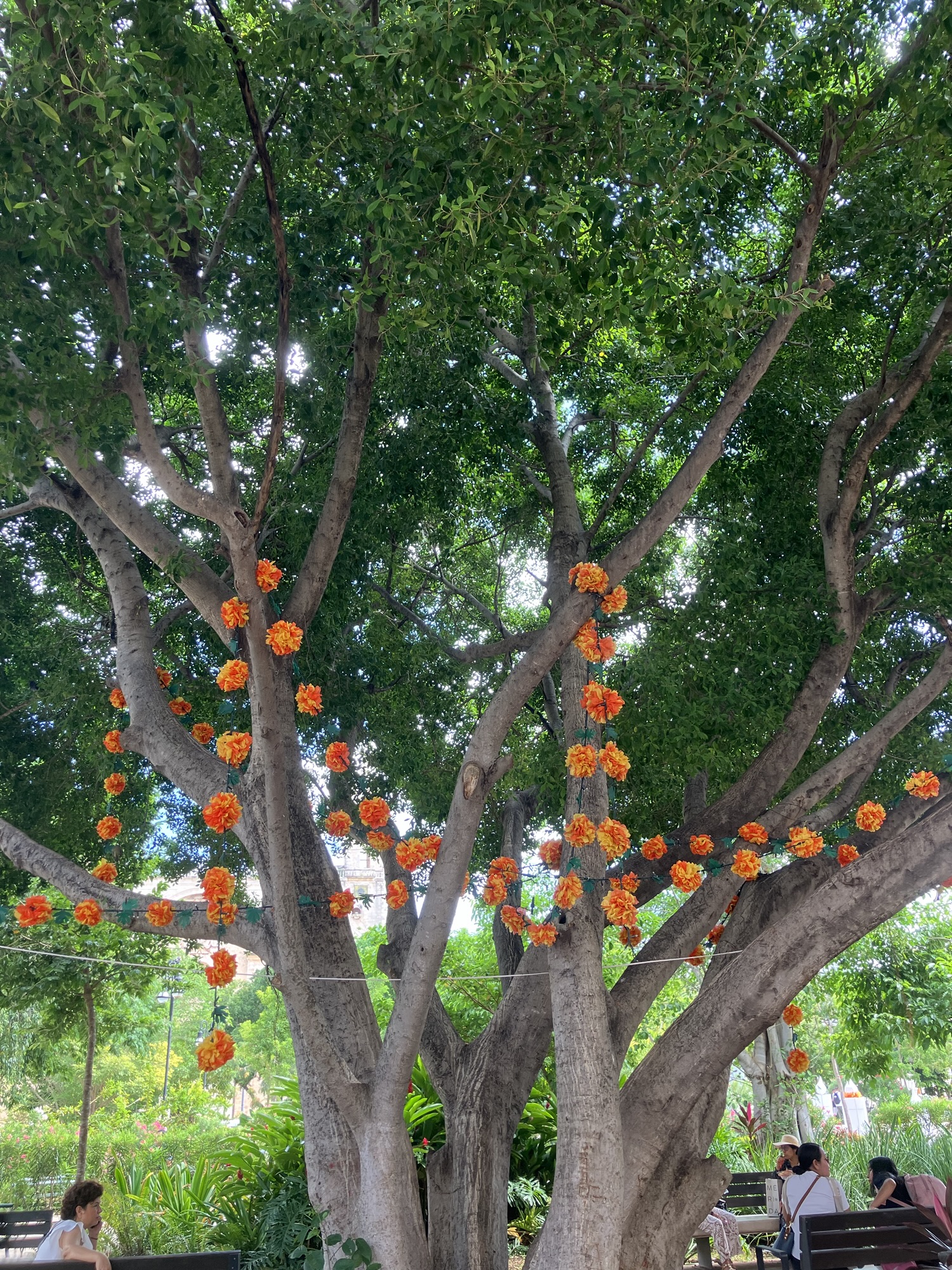
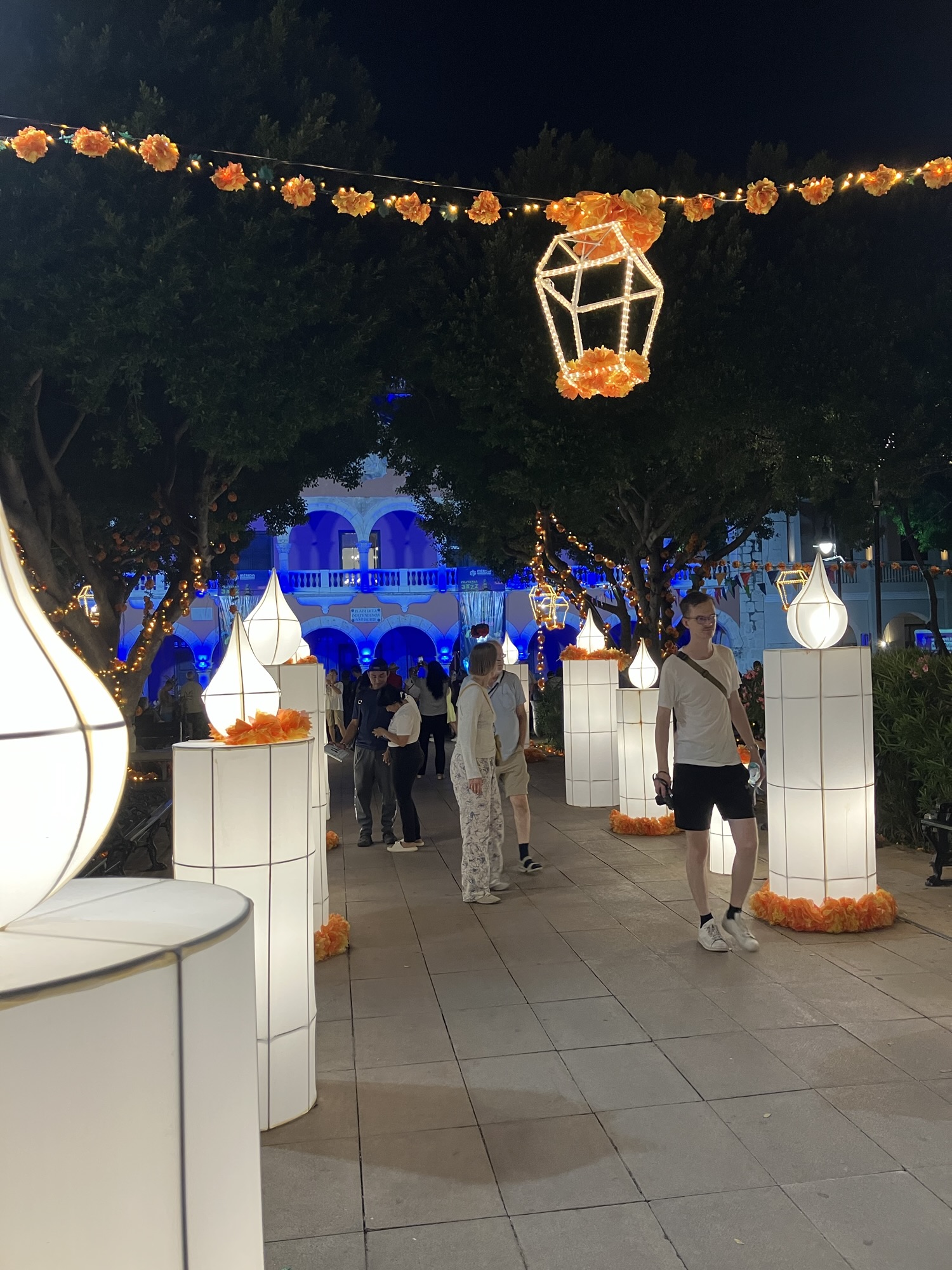
Plaza Grande is the most touristy park, set in the middle of the historic center of the city. It has visitors with cameras and the obligatory six-foot-tall MERIDA spelled out in colorful letters. But there are also locals pushing babies in strollers, fanning themselves on benches, and gathering together for an evening out. One night I saw a couple in their wedding finery posed for pictures along the candlelit path leading to the center of the park.
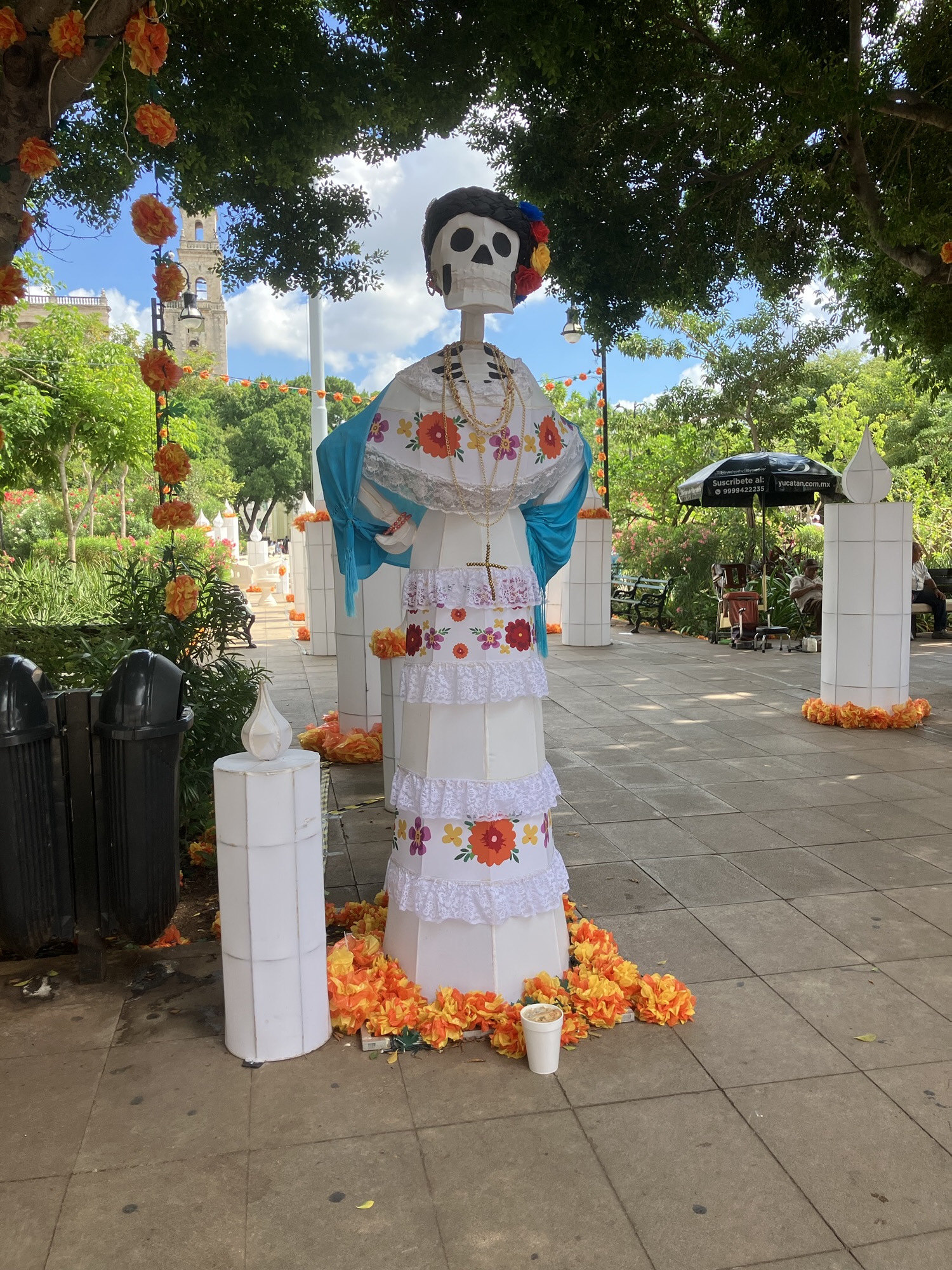
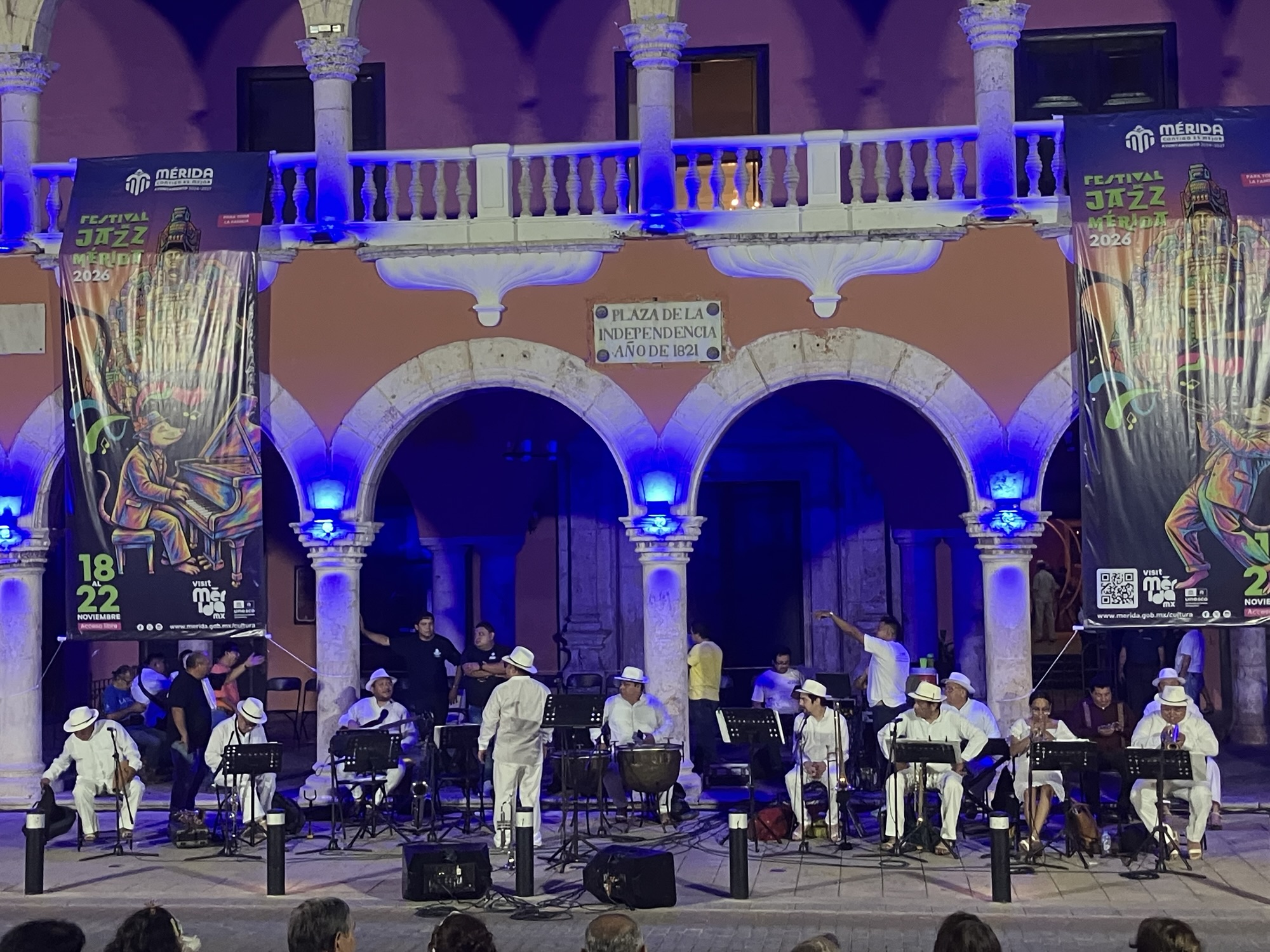
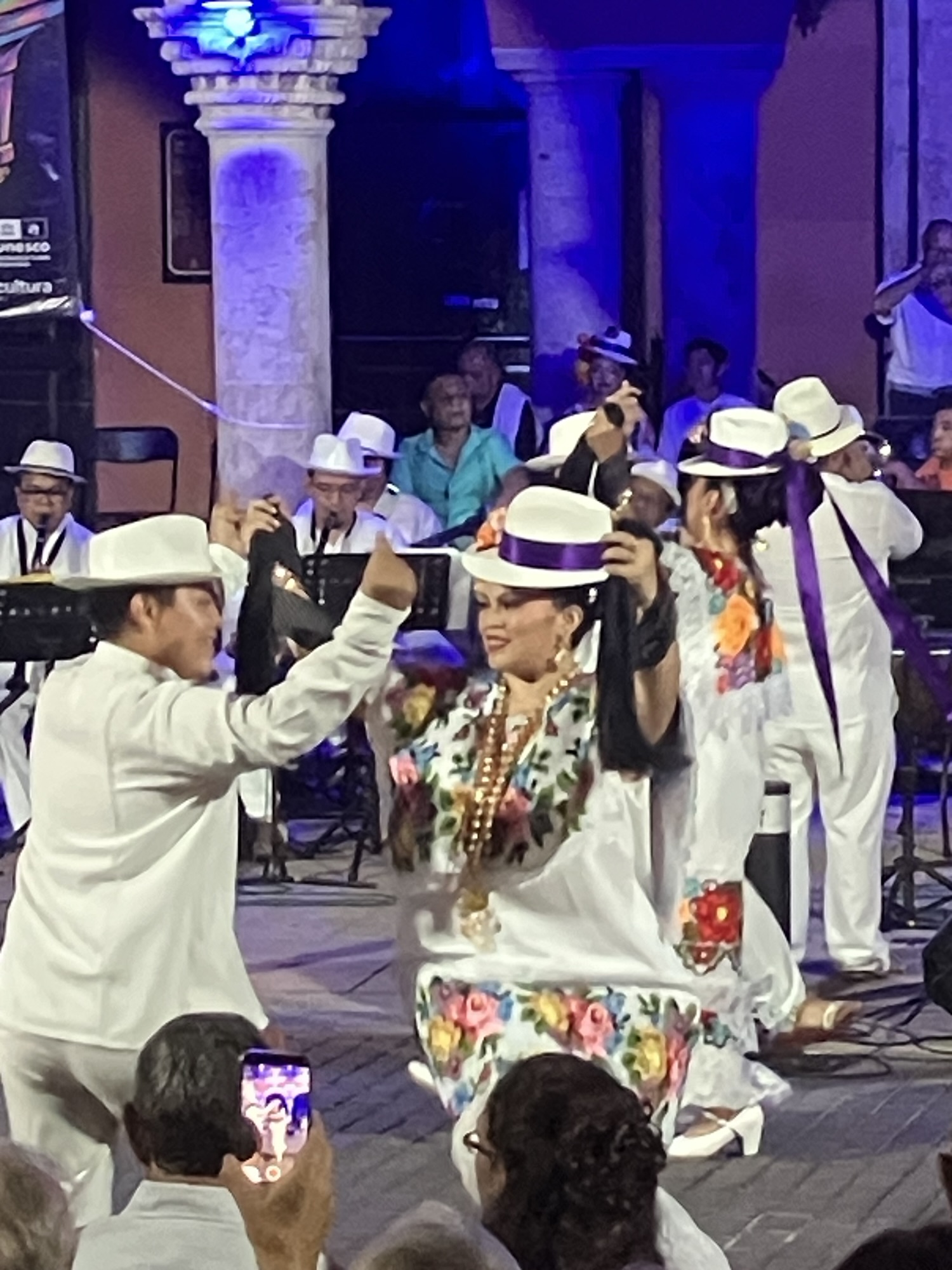
In fact, the evening I went to see the traditional Yucatecan dancing there, hundreds of Yucatecos had filled the seats. They are proud of their heritage and their city. They also love any reason to celebrate and be together. For the roughly two hours I was there, they cheered on every performer.
On my way to Plaza Grande, I stumbled on Parque de Santa Lucía, a lovely park right in front of Iglesia de Santa Lucía. There were street vendors and musicians and people from the neighborhood getting together.
A few nights before that, I went to Parque de Santiago, where Remembranzas Musicales (musical memories) is hosted every Tuesday night. It’s a free concert and dance, and the park was filled with dancers young and old enjoying the music and the company. Food stalls were set up – I couldn’t resist a marquesita, a slightly sweet waffled cone made on-site and filled with cheese. If you know me, you know I love my cheese.
While there I met two lovely women and their husbands. They spoke no English, and of course my Spanish is practically non-existent, but with gestures and the odd word here and there, I made new friends. I was even asked to dance!
Along my walks exploring the city, I’ve come across so many parks that call to me to come sit under their shade trees and rest on a bench. I almost never refuse the invitation, because from those benches, I can observe real life in Merída. Not places to check off a bucket list – just life.
It’s why I started all of this in the first place, why I like to stay more than just a few days in each new place. I want to breathe in the culture, to have genuine connections with people around the world.
Merída’s parks are made for this.
Planes, Trains, and Ships: The Rhythm of My Life
As I finish up the first leg of my wandering life, I’m discovering that how I travel is just as important as where I go.
Planes:
Air travel is usually the quickest – and the most frustrating – way to travel. From a pilot in Malta who tried to fix a mechanical issue on our plane (thankfully he realized he needed to call a real mechanic), to a mad dash through the Atlanta airport lugging a heavy bag and still arriving too late, to a medical emergency one row ahead of me that required that we turn around and start over, air travel is rarely boring. Annoying, stressful, and at times, downright miserable, yes, but rarely uneventful. Sometimes, though, it’s the best or the only way to get where you are going.
The funny thing is that I love planes and will happily put up with all the annoyances just to feel that rush of the lift-off.

Trains:
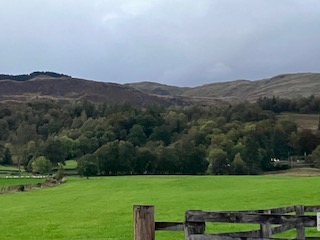
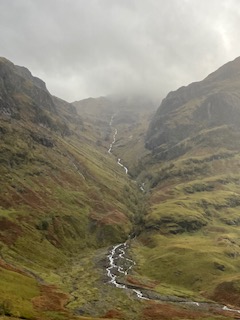
Trains are by far the best way to actually see a country. Its farms and mountains and small towns. You get a real feel for a country on the ground. It’s relaxing and slow and immerses you in the geography of a place.
It also eliminates a lot of the flying frustrations: you have control of your luggage, and there’s no TSA misery. Weather is much less likely to derail your plans. I used to take the Vermonter from Virginia to New Hampshire fairly frequently, and that bad boy ran even when planes were grounded.
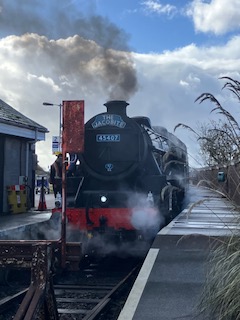
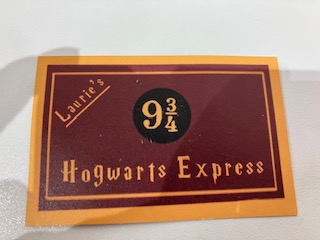
Taking the Hogwarts Express Steam Train across the famous viaduct was so much fun, and all the trains through Scotland showed glorious scenery. And lots of sheep. So if sheep are your jam, definitely take a train through Scotland.
Let’s face it – it’s simply a more beautiful and comfortable way to travel.
Ships:
Ships are the slow-down-and-take-a-breath mode. I love being on the water, and the open ocean is so vast and awe inspiring.
I returned from the UK aboard a cruise ship. A two-week transatlantic cruise. Now for those of you turning up your noses, cruises happen to be a terrific mode of transportation. Along the way you stop at ports you might not have gone to otherwise, and yet never have to unpack. You don’t have to figure out accommodations or food or transportation – it’s all right there. For me it’s a way to unwind after a month of non-stop exploration.
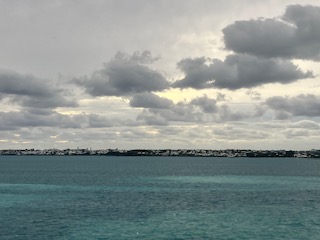
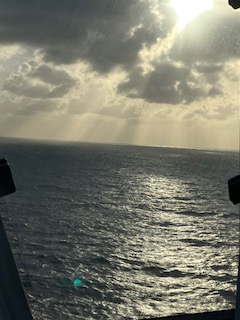
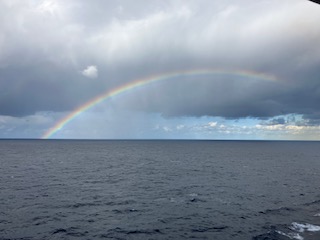
One day you’re in Vigo, Spain, the next in Lisbon, then a few days at sea before arriving in Ponta Delgada. Four more sea days, then a stop in Bermuda. Another few sea days and you are back in the states.
A cruise ship gives you permission to slow down and read a book and write, which is what I did much of the time.
And it allows for some much-needed pampering. Y’all, I had a butler on this cruise, and she was nothing short of amazing! Pako remembered what I liked and made sure all of my refreshments were well-stocked every day, and she brought me room service. She showed me incredible kindness, genuinely took an interest in my life, and shared hers with me.
She even set up a disco ball and goodies in my cabin one night with a note to congratulate me on my retirement.
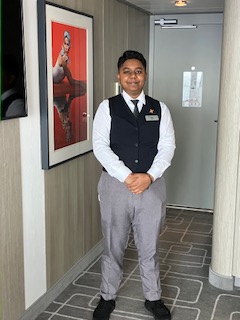
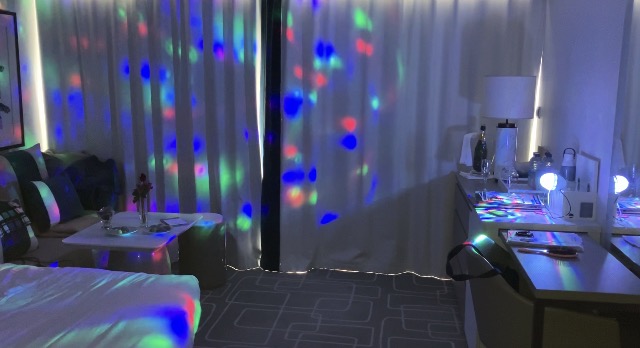
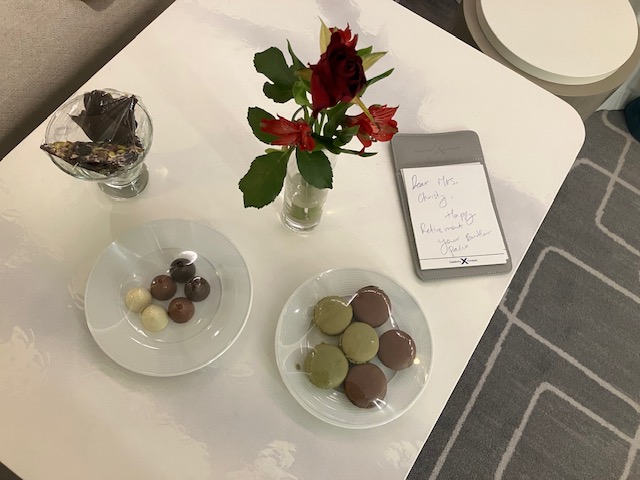
If you are ever on a Celebrity ship in a suite, I hope you are lucky enough to get Pako as your butler.
_________________________________________________
After this leg of my wandering life, I’ve learned that I like a mix of all three transportation modes. Planes get me across continents. Trains let me watch them unfold. And cruise ships remind me that sometimes the journey is the destination.
I have several of all three scheduled over the next year, and I can’t wait to see the places they will take me.

