Super Bowl (of Books) Sunday

I love Super Bowl Sunday.  Nope, not for the football, or the parties.  To me, Super Bowl Sunday means only one thing:  a whole day of reading anything and everything I want to read.  No chores, no TV, no social obligations, not even any writing.  I reserve that one special day a year just for my books.  Last year I was on the beach with a blanket, a camera, and a bag of novels.  Today, it was a bit chilly for that – 60+ but super windy – so I stayed on my sofa in my jammies and never ventured outside.
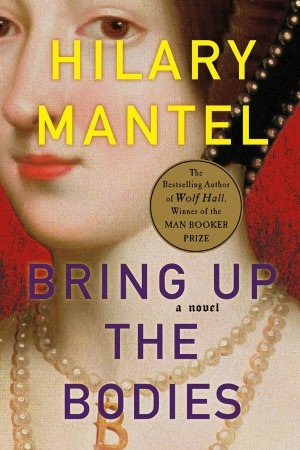
Bring up the BodiesTo prep for the big read, I make sure to have plenty of page friendly snacks – mainly chocolate – and a stack of books I most want to read.  Pre-game I thumb through the stack to decide what I want to lose myself in for a whole day, reading back covers and skimming random sections.  This year I have a great team, all first string reads.  To kick-off the day I finished up Wish You Were Here, by Stewart O’Nan.  Then, mid-morning, I started a new book, one that’s been waiting on the top of my to-be-read pile – Bring Up the Bodies, by Hilary Mantel.

After I’ve been reading for a while, I periodically pause the novel to read short stories from a new collection. (my answer to Super Bowl commercial breaks)  I’m totally excited today to be reading one of my favorite short stories authors, George Saunders, and his much-lauded Tenth of December.   His stories are the perfect Super Bowl of Books commercial breaks, smart and funny and memorable.  I continue in this fashion until after midnight, knowing if I stay up way too late immersed in my fictional world, well, at least everyone else will be sleep-deprived tomorrow, too.

My Super Bowl of Books is not for everyone, but for those of us who really do not give a damn who wins a football game, it is the best sport I can imagine.

Wandering in Cemeteries

Tomorrow I’m heading downtown for a little alone time with a few ghosts.  I’ve been meaning to revisit some of Charleston’s graveyards, and it’s supposed to be decent weather, and well, I can’t think of a better thing to do with my Sunday afternoon.

I’m a big fan of cemeteries and graveyards.  (For those of you who don’t know the difference – and I didn’t until not too long ago – a graveyard is attached to a church, while a cemetery is separate from church grounds.)  There’s something about them that can keep me mesmerized for hours, reading old headstones, making up stories about the people who are buried there.  Everywhere I travel I search for them.  I’ve wandered graveyards in France, and Italy, and Ireland, and in most places I’ve been.  My daughter Lauri and I found one tucked away in a park in Venice, and I dragged my oldest daughter Ali to the graveyard at St. Michael’s here in Charleston when she was only a few years old.  Sometimes my traveling companions are game, and sometimes they opt to shop while I daydream. Which is OK, because to me a graveyard really is best as a solitary experience.

Beara Peninsula, Ireland

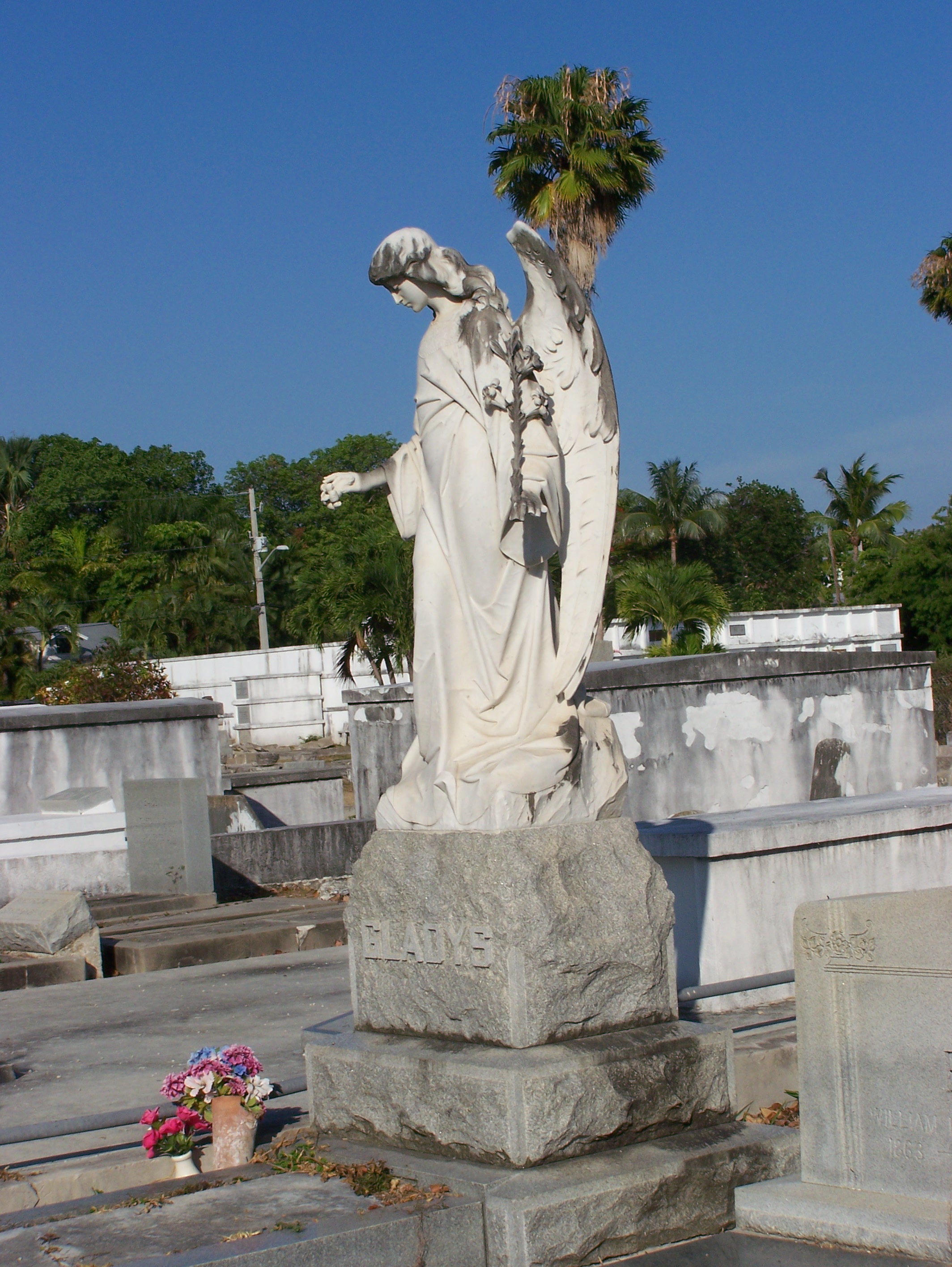
At an artist residency at Anam Cara in Ireland, I could be found most days at sunset walking through the cemetery on a hillside across the street.  I took pictures, wrote in my travel journal, and talked to myself about my characters, imagining them there.  While in residence at the Studios of Key West, I rode my bike to Key West’s historic 1847 Cemetery, where I spent an entire afternoon photographing the above-ground tombs and statues.  One of my favorite inscriptions there is “I Told You I was Sick.”  Another gem is “good citizen for 65 of his 108 years.”

Key West 1847 Cemetery

While in Key West, I met an artist who had started his work in stone as a gravestone carver.  Imagine my fascination with that.  I asked so many questions that I’m sure he wished he’d never run across me.  But one day I’ll use that information in a story, I’m sure.

Tomorrow, I’ll take some pictures and daydream, wandering between confederate soldiers and signers of the Declaration of Independence.  But the ones that will interest me the most, that always do, are the people no one has ever heard of, the ones I can create stories for.

Getting on My High Horse (and Helping Uncle Jack Off His)

“Capitalization is the difference between helping your Uncle Jack off a horse and helping your uncle jack off a horse.” Unknown (thanks, Linda, for sending this to me)

I’m going to sound like an old fogey reminiscing about the good old days here, but I’ll risk it.  It seems to me that too little emphasis is being placed on learning the basics of English these days.  You know, sentence structure, punctuation, and capitalization.  Seriously simple stuff.  Either it’s not being taught or there are a lot of students who aren’t listening.

I once had an employee who randomly capitalized words in a sentence.  Or, as he would have written, “I Once had An Employee who randomly Capitalized words.”  Every email he sent made me get out my red pen.  I would print the email and, after marking it up, toss it on his desk.  When this didn’t get through to him, I had him take an English class.  But capitalization was not addressed in that class or he was absent the day it was, because his random cap habit was never kicked, and he continued to look like a dumbass.

We’re not talking only uneducated people here.  I’ve had writers tell me that they aren’t worried about that kind of stuff, that once a story is accepted for publication, the editors will clean it up.  Wrong.  It will probably never be accepted anywhere if the punctuation and capitalization are a mess.

My mother claims it’s a result of too much texting and tweeting.  I’m not buying it.  There are plenty of luddites out there who don’t know the basics of grammar and punctuation and spelling.  I think the problem is much deeper than that.  Many people seem to believe that it just doesn’t matter anymore, and that the rules no longer apply.  Not true.  Every time you send a poorly constructed, misspelled email, you are showing the recipient that you are too lazy or too stupid to communicate in proper English.  And forget landing an interview if your cover letter and resume are riddled with misspellings and incorrect usage.

As for any writer who is too lazy to make certain a story is grammatically correct, you can blame the editor who doesn’t want to spend his time teaching you first grade English for that rejection.