How am I doing?

Almost halfway through 2011, and it’s time to check in on my goals. 

I can hear my writing friends groaning all the way down here in Mount Pleasant.  Yes, this does mean that soon I’ll be harassing you about your goals.  But first, I need to check in on my own progress.  And maybe add a few new ones if I’ve crossed any off the list.

I’m a big believer in written goals.  The process of writing down my goals makes me think, really think, about what I want to accomplish, and how I’m going to go about it.  It makes me realize that if I want to finish a project by a certain time, I have to commit to a certain amount of time at the computer.  And if I want that fabulous short story I’ve written to ever see print, I have to commit to sending it out.  Now, I can tell myself that I will finish that project or get that story published, but without a concrete plan to make that happen, most likely it’s not going to happen.

Each November, I start planning for the next year’s work.  I think long term (finishing that big project) and shorter term (revising a short-short that hasn’t yet found a home).  The goals I end up with are “SMART” goals:  specific, measurable, attainable, realistic, and timely.  For example, I may have a goal to write 1000 words a day, 5 days a week.  Or to send a rejected story back out within 48 hrs.  Or to apply to two residencies over the course of the year.  As you can see, these goals are within my control.  I don’t say I will get a story published – that is out of my control.  But I can increase the odds a story will be published by keeping it circulating.  (Reminder – you’re not going to get published unless you send your work out.  No one is going to come to your house and ask you for that fabulous story stuck in your bottom drawer.)

But, and this is a big but, just writing down your goals is not going to make them happen.  You have to revisit them frequently to see how you’re doing.  I pull mine out about once every 2 or 3 months.  Sometimes I find I’m doing better than I realized, sometimes I find I’ve been slacking.  I don’t beat myself up about it – I just use this as a reminder that I have to be more aware of what I am and am not doing in my writing life.

Now I’m going to go check up on my progress.  C’Ville friends, you can expect an email from me any day now about yours.

Staying put

For the first time in a long while, I don’t have any trips planned for the immediate future.  I’m waiting to hear from a couple of residencies, and of course I plan to go up to Charlottesville for Christmas, but otherwise nothing.  No need to think about carry-ons or getting my car checked over or any of the other myriad things that have to be taken care of before a trip.

I’m curious to see whether staying in one place for a bit will help or hinder my writing.  One of my favorite things in the world to do is plan for a trip.  (Just ask my friend Rachel.  She’ll tell you how I obsessively planned for our trip a couple of years ago to Anam Cara, a writer’s retreat in Ireland.  Or ask my daughters about our vacation to Hawaii.  I made a spreadsheet for that one.)  Of course, travel planning is also one of my best distractions, a great avoidance trick when I get to a tough place in my writing.  Will I be more or less productive sitting still? 

Change is usually a good thing for my writing.  I find myself less tied to reality when my reality keeps shifting.  But I can always go to a café to write if I need a change of scenery, or drive five minutes to the beach.  And perhaps without spending time worrying about whether to check a bag or take a carry-on, I can worry about whether the protagonist in my novel would really toss his boss into a lake, or whether he would just want to.

That said, I’m still waiting for word on those residencies, and I am looking at writing conferences for 2012, so maybe I should start checking airfare and average temperatures now…

Looking out the window in Mount Pleasant, SC
Room with a view

A Writer’s Dream…

“If only I could manage, without annoyance to my family, to get imprisoned for 10 years, without hard labour, and with the use of books and writing materials, it would be simply delightful!”

— Lewis Carroll

All writers dream of having the time and the space to write.  But you don’t have to just dream.  Consider applying for a residency at one of the many artists colonies across the country or around the world.

The Mango Tree House TSKW

When I first heard about artists’ colonies, I imagined that to be awarded a stay at one, you had to have published a book, and you needed to know the secret handshake to get into the clubhouse.  The one I didn’t know.

In spite of the fact that I do not have a book published (yet) and am certainly not privy to any handshake, I’ve been lucky enough to be awarded two residencies: one at The Studios of Key West, and one at Virginia Center for the Creative Arts.  Both were magical and productive, but they were very different experiences.  TSKW is small, usually only one artist at a time, while VCCA has 20-25 artists in residence at any given time.  TSKW is free, but you are responsible for your own food.  VCCA has a small daily fee, but food is included.  As different as they are, though, both gave me that most precious gift:  the freedom to think of nothing but my interior world for weeks at a time.

When you have that freedom, amazing things happen.  You take risks.  You dream plot points during naps.  You live and breathe your characters until the outside world becomes a little fuzzy, more like a dream world than your fictional one.   You get more writing done in a week than you normally get done in a month.

For anyone interested in a residency, I recommend you do some research.  Decide exactly what kind of experience you are looking for, and which residencies meet your needs.  A couple of things you may want to consider:

  1. Do you want to meet other artists, or do you prefer to be by yourself most of the time?
  2. Is location important to you?  Do you work better by the ocean, or in the mountains? Do you need to be close to home or further away to relax? Are you afraid of being in an isolated location?
  3. Is it more important that someone prepares your meals, or that you determine your own meal choices and schedule?
  4. What is your minimum comfort level?  (Some residencies are in cabins heated only by wood stoves.)
  5. How long do you want to be away?

There are many artists’ colonies out there.  A good place for information is the Poets & Writers website, www.pw.org.  They have listings of residencies and their application deadlines, as well as links to the websites so you can find out more about them.  Another great resource is the Alliance of Artists Communities, www.artistcommunities.org.  In addition to the info on their website, they put out a directory of residencies which can be purchased on Amazon.

The application process can be time consuming, and there are often application fees.  Be prepared to be rejected, but don’t take it personally.  There are many more applicants than spaces available.  For example, last year Hedgebrook received over 800 applications for something like 40 slots.  But it’s well worth the effort, and as in all of the writing life, persistence will eventually pay off.

I’m far from an expert, but I’ll be happy to answer any questions you might have about starting the process.  Just ask away in the comments, or email me.

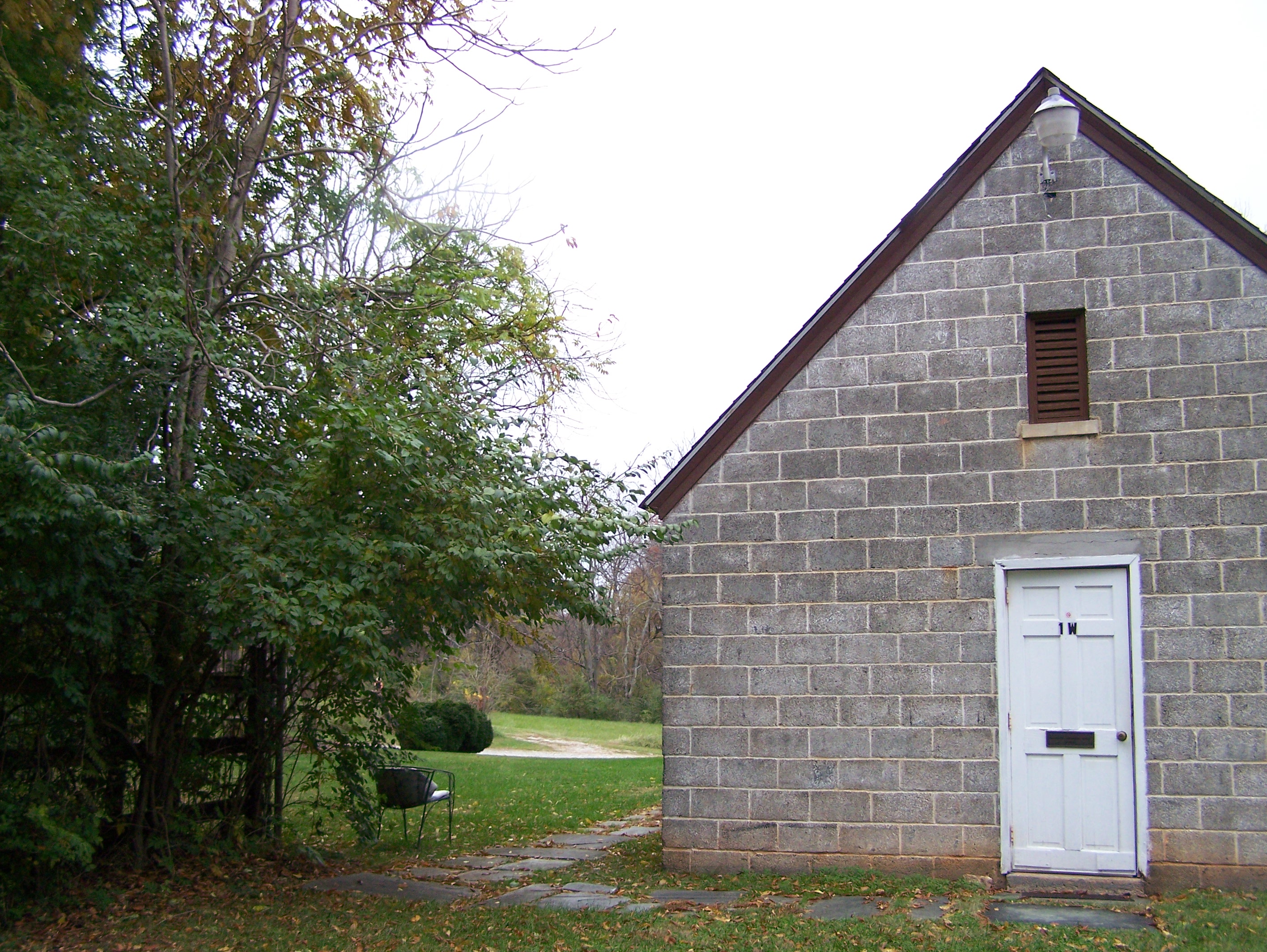
Elizabeth Hollister Frost studio - VCCA