I Love Mail

Ivy Virginia PO

Maybe the hardest thing about this nomadic life I’ve been living for the past year is the mailing address issue.  No matter how promptly I put in forwarding orders with the post office, I worry that I’ll miss mail.  I have nightmares about important letters bouncing from Virginia to NH to SC and back to Virginia and never finding me.

Some people might not care. I do.  Mail is a big deal to me.  I love mail, love the anticipation of checking the box every day, love the promise that every mail day brings.  Will I get a letter, that most anachronistic of pleasures?  Will I have an acceptance from Tin House waiting for me when I look inside?  Will a new book arrive?  A gift?

My relatives have always been wonderful letter writers.  My great-grandfather Bob was particularly prolific in his correspondence with me. We wrote back and forth for years, and I’ve kept many of those letters, the last written just a few weeks before his death at 99 years old.  I pull them out of my box of treasures every now and then and reread them, remembering his wry sense of humor and his stubborn determination to stay independent as long as possible.

My mother still writes lovely personal notes to everyone she knows.  She doesn’t own a computer, doesn’t email or text.  She shows people how much she cares by carefully choosing cards and taking the time to cover them with loving thoughts in her elegant handwriting.

I remember the thrill I’d get as a child when a letter would come from one of my aunts.  My mother has three sisters, and they all made me feel grown-up and special when they wrote.  It makes me sad that kids don’t often get letters like that anymore.  So I’ve decided that  once a week I’ll write a child or an elderly person a note, just to let someone know he or she is too special for a mere email. I do worry, though, that my efforts may be wasted when people receive letters from me they can’t decipher.  After years of typing, my handwriting, which was never very good, has deteriorated to a blur of lines and scribbles that look like something a monkey might do if he got hold of a pen.  It’s gonna take a great deal of effort to make those notes legible.

And of course I’ll keep sending out submissions to those journals that still want submissions sent via the US Postal Service.  Then I’ll watch the mailbox every day hoping that I put the right address on my self-addressed envelope so that the acceptance letter can find me.
No Excuses

I hear it all the time, and not just from would-be writers, but from would-be potters and artists and gardeners, and well, from just about everybody who claims to want to do something he or she isn’t doing.  “I just don’t have the time.  But someday, when I do have the time, I’ll write (or paint, or make pots, or grow my own vegetables).”

Bullshit.

We make time for what we want to do.  Funny, I rarely hear people say they don’t have time to watch TV, or have sex, or post on Facebook, or eat ice cream.  Somehow they find time in their busy lives for those activities. But when it comes to creating something of value, something lasting, suddenly
there isn’t time.

Is Dancing with the Stars more important than writing that novel you’ve been talking about for 10 years?  Is what’s happening in twitterverse more important than the half finished canvas in your garage?  Is sex or ice cream more important than… OK, so maybe you could make a case for the importance of sex and ice cream.  (But you could always make time for artistic pursuits by eating your ice cream and having sex simultaneously.  Just a suggestion.)

Tell me how hard writing is, or tell me it hurts too much to do it, or tell me you’re tired of being rejected, or that your butt is tired of being planted in the desk chair.  But DO NOT tell me you don’t have time.  Everyone can find an hour somewhere in the day to do something important.  Get up earlier. Stay up later.  Turn off the TV. Get off the internet.  Get off the phone.

And if you don’t make time for it, don’t talk about it.  Don’t whine about how busy you are.  Everyone in this world is busy.  The people who create are the ones who really care enough to make time to do it, regardless of the sacrifices.  Either you want it badly enough or you don’t.

My writing motto is “no excuses.” I don’t accept them from myself, and I don’t accept them from others.  So beware.  If you tell me you will write one day when you have time, all you’re going to get from me is “Bullshit.”

On earthquakes, hurricanes, and hyperbole

It’s hard to talk about anything much but the weather this week. Between the earthquakes in central Virginia and the hurricane on the east coast, it’s been pretty exciting. Everybody here in Virginia has an earthquake story they’ll tell you, and I could share mine, too, but I won’t. I prefer to use mine, embellished and exaggerated ( I have a real gift for hyperbole), in my fiction.

Because that’s what writers do. We take an experience and we shape it into something that fits into a story, we use it to underscore and provide an anchor for the story itself.

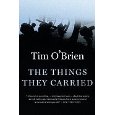
As I tried to explain to someone once, a war story is not really a story about the particulars of war, but rather it’s a story about the people who live through that war. (If you’ve never read Tim O’Brien, you should.) If we want history, we can read nonfiction. Fiction is not about reporting an event. It’s about finding the truth and meaning of a character’s life through the lens of the event. It’s about tossing characters into a hurricane and watching how they react.

I read a wonderful short story once about the breakup of a marriage in the midst of a hurricane. The hurricane was real, and powerful, and I could hear the freight-train rushing of the wind outside the house, feel the fear of the dog the couple was fighting over. But it was the characters themselves that gave the story meaning.

Anyone can describe what it feels like to be caught up in a hurricane, or feel the earth move under them as it shifts and buckles in an earthquake. But writers do more than report the experience. They give it meaning within the context of a character’s life, use it to expose weaknesses or show previously untapped courage. Writers use their experiences to enrich their writing, to add veracity to their fiction.

So if you want to hear about my experience sitting in the upstairs of an old house while the walls shook and groaned, don’t look for it here. Just keep reading my fiction. It’s sure to show up there sometime.