Get Your Words (and Wine) On

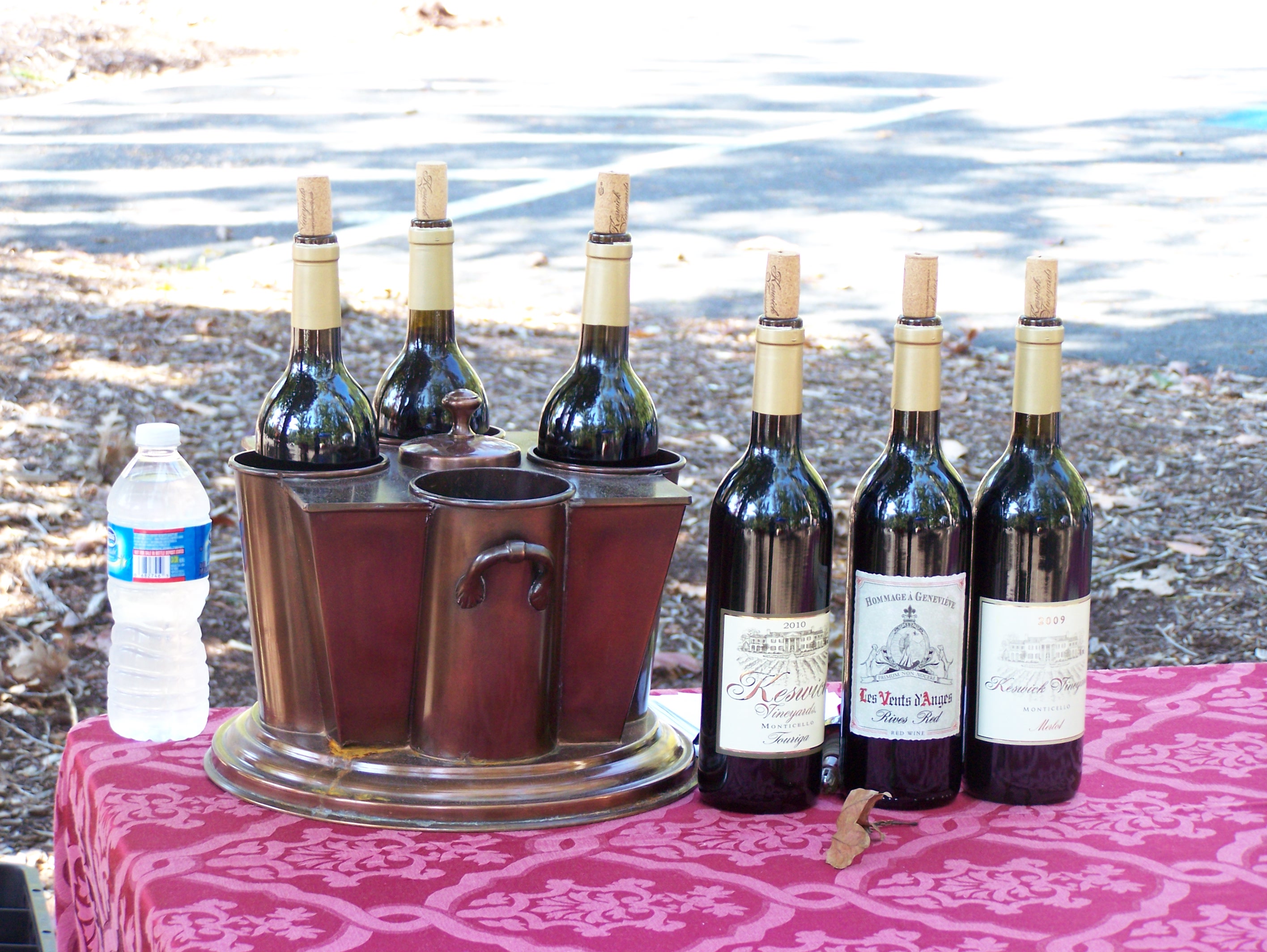
On Sunday, October 14, 2012, from 2:00pm to 5:00pm, Glass House Winery will host the third annual Words & Wine, a fundraiser for WriterHouse, a nonprofit writing center in Charlottesville, VA.

Before I go into details about Words & Wine, let me tell you a bit about WriterHouse.  If you’ve read my posts for a while, you know how important I believe community is to writers.  For the past four and a half years, WriterHouse has served as a community, a gathering place, and a family for hundreds of writers in central Virginia.  They’ve hosted readings by famous and not-so-famous writers, they’ve offered classes and seminars, and they’ve welcomed writers (and readers) to come together and find kindred spirits.  I’ve been involved with WriterHouse since the beginning, and the people I’ve met there have enriched my life, writing and otherwise, more than I can say.

But it takes money to run a writing center.  So Words & Wine was born.  Words, because obviously those of us involved with WriterHouse love words, and Wine, because, well, even non-writers love wine, right?

Go out and support a great cause, and have some fun while you’re doing it.  I promise you’ll have a great time.  Admission of $30 per person includes wine tasting, a complimentary wine glass, light hors d’oeuvres, and one raffle ticket.  I’ll make it easy for you – just click this link to get to the WriterHouse website and purchase tickets using the PayPal button.

But, you say, I live 500 miles away and really can’t swing airfare just for a one day fundraiser.  No problem.  You can still help the cause by purchasing raffle tickets for some really amazing prizes, including three vacation destinations:  France, Santa Fe, and Vermont.  And why should you support a writing center that you’ll never be able to go to?  Well, say you finish that Great American Novel, and you are working on your book tour.  And you remember that there is a terrific writing center in Virginia that loves to host readings for new writers.  Or maybe you don’t write, but you love to read.  Maybe that donation will help keep the doors open so that your future favorite book can be written there.  Or how about this?  Supporting the creation and appreciation of literature is the mission of WriterHouse, and you are all about that.  Whatever the reason, consider donating.

Maybe I’ll see you there, if I can arrange to make it up.  But even if I don’t, you can bet I’ll be buying raffle tickets.  Where better to finish my WIP than in France?
Don’t Let Your Mental Muscles Atrophy

Writing is like exercise.  The more you do it, the easier it is.  Or rather, the easier it is to make yourself do it.  My friends who run (no, I don’t know from personal experience) say that when you are in the habit of running, it becomes part of your day, like eating or sleeping.  Miss a day or a few days, and you start feeling bad.  Miss a week, and it’s easier to find reasons not to do it.  The longer you go, the harder it is to put on those running shoes and get out there.

It’s the same with writing.   When you are in the habit of writing, it’s just easier to sit at the computer and face the blank screen.  Your mental muscles are strong, your endurance is high, your confidence unshakable.  Miss a day, and you feel uncomfortable and guilty.  Stay away from it for too long, and it gets easier and easier to avoid.

I’ve been away from this blog for a month.  It started as one missed week, and that bothered me.  But one week quickly became two, then three, and suddenly a whole month had gone by.  I’d like to say I was too busy working on the novel to find time to knock out 400 words for the blog.  In truth, I let myself be distracted, and took some time off from writing in all its forms.  While I jotted down sentences here and there, and wrote for short periods of time, I wasn’t spending long hours in the chair.  Life had thrown a few distractions at me, and my head was not in my work.  And it’s OK to take a break every now and then.  Sometimes we need to take time off and “fill the well” as my friend Kristen-Paige says.  But I stayed away too long.  I took so much time off that it became intimidating to think about using those out-of-practice mental muscles again.

So this blog post is my mental warm-up, my stretch before the run.  This afternoon I’ll get back to the real work.  It will be harder than it should be, but that’s my own fault, and I’ll work through it.  Those flabby muscles will have to be built back up, and the only way to do that is to write.

The Good, the Bad, and the Believable

From the time I learned I could string sentences together and create a story, I wanted to write.  I started with fairy tales with princesses and evil witches, and then moved on to barely more realistic stories peopled with righteous children and evil adults.  The characters were cardboard stereotypes – mean teachers, unhappy orphans, and on and on.  People were either good or bad – there was no in-between.  It’s the way the world seemed to me as a child.  Everything was right or wrong, good or bad, fair or unfair.

Of course as we grow up we realize that the world is full of ambiguity, that most people straddle the fence between good and bad at some times in their lives.  Things are complicated.  I want the books I read to be complicated. I want the characters to be fully realized, complicated beings.  I want to feel empathy for even the most unlikable character.

As I’ve said many times, I don’t care a thing about liking the characters in a story or book.  Some of the greatest characters in literature are basically unlikable people (the first that comes to mind is the protagonist in JM Coetzee’s Disgrace).  But there is always some humanity there, something that makes me want to stick with them long enough to find out what happens.  That humanity is what makes a good character.  Not good in the way I thought back when I wrote about those princesses, but good in a way that makes you say, yeah, I believe in this person.

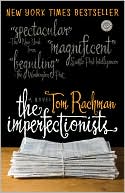
I just finished reading Tom Rachman’s The Imperfectionists, and while I didn’t love the book as much as many critics did, I admire the way he made even the most unlikable characters sympathetic in some way.  In the author’s interview at the end of the book, Rachman addresses this. “Several (characters) are tricky types, the sorts who, had I met them in a newsroom, might have prompted me to run.  But on the page, I had fondness for them.  It’s the writing that did this.  To form these characters, I tried to conceive of their motives, resentments, disappointments … Writing (and reading) is a sort of exercise in empathy… (it) stirs compassion that, in real life, is so often obscured by our own motives.”

I love that.  “Stirs compassion that in real life is so often obscured by our own motives.”  I believe that the best fiction does this, for the reader and the writer.  That’s what I want in my own stories.