On earthquakes, hurricanes, and hyperbole

It’s hard to talk about anything much but the weather this week. Between the earthquakes in central Virginia and the hurricane on the east coast, it’s been pretty exciting. Everybody here in Virginia has an earthquake story they’ll tell you, and I could share mine, too, but I won’t. I prefer to use mine, embellished and exaggerated ( I have a real gift for hyperbole), in my fiction.

Because that’s what writers do. We take an experience and we shape it into something that fits into a story, we use it to underscore and provide an anchor for the story itself.
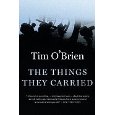
As I tried to explain to someone once, a war story is not really a story about the particulars of war, but rather it’s a story about the people who live through that war. (If you’ve never read Tim O’Brien, you should.) If we want history, we can read nonfiction. Fiction is not about reporting an event. It’s about finding the truth and meaning of a character’s life through the lens of the event. It’s about tossing characters into a hurricane and watching how they react.

I read a wonderful short story once about the breakup of a marriage in the midst of a hurricane. The hurricane was real, and powerful, and I could hear the freight-train rushing of the wind outside the house, feel the fear of the dog the couple was fighting over. But it was the characters themselves that gave the story meaning.

Anyone can describe what it feels like to be caught up in a hurricane, or feel the earth move under them as it shifts and buckles in an earthquake. But writers do more than report the experience. They give it meaning within the context of a character’s life, use it to expose weaknesses or show previously untapped courage. Writers use their experiences to enrich their writing, to add veracity to their fiction.

So if you want to hear about my experience sitting in the upstairs of an old house while the walls shook and groaned, don’t look for it here. Just keep reading my fiction. It’s sure to show up there sometime.

Reading and Writing in C’Ville Again

Charlottesville doesn’t seem to be finished with me yet. In a matter of days, the entire universe has conspired to get me back up here for a little while, so I have to believe there’s a reason.

Whatever purpose the universe has, I’ll use this time to take advantage of the wonderful community of writers I have here to get some feedback on a couple of stories I’ve been struggling with. So beware, my writing friends, manuscripts are on the way.

Writing groups and trusted readers are a valuable part of any writers’ life. I have a group of readers who know my work and I know theirs and I would trust any of them to give me a tough but constructive critique. They make me work harder to get at the truth, they make me a better writer. (well, except they can’t seem to get me to stop using comma-splices.) If you’re ever lucky enough to find readers like that, hang on to them. They are rarer than you might think.

When I first started getting serious about my writing, I took a workshop with students with a wide range of experience and skill levels. While there were many wonderful writers in that class, there were some who had no business commenting on other writers’ work. They just weren’t ready. I probably wasn’t ready myself. But many of the comments from a select few were vague, confusing, or downright idiotic.

My favorite was a guy who was deeply offended by a story of mine in which a woman sets fire to an art gallery showing her ex-boyfriend’s photography. Instead of making suggestions about the writing or the structure or even the plot, he fixated on the fact that arson is illegal, and therefore I shouldn’t let my main character be an arsonist. Now, as far as I’m concerned, I can have my characters do whatever I please if it feels right for them. Not right for me, and not right for anyone else. Right for the character. Besides, IT’S FICTION! If you are so bothered by my character’s illegal act, just imagine she’s arrested when the story ends. “Because it’s against the law” is not effective critiquing any more than “because I said so” is effective parenting.

Finding the right readers is not easy. Don’t be afraid to walk out of a group if it’s not right for you. And don’t feel compelled to let just anyone read your stories. It’s like giving birth and holding up your baby on a street corner and yelling, “So, what do you think?” You want to know from the doctors and nurses if the baby is healthy, but don’t ask all the bums on the street how they like him. You don’t need to hear that they’re just not connecting with him or that something is wrong with his head, but nobody’s quite sure what.

Once you do find readers you trust, listen to them. You don’t have to do everything they say, but do pay attention. If more than one reader tells you, for instance, that you use way too many comma-splices, you might want to take them seriously. Then again, they’re your own damned commas, you can splice them if you want.

No do-overs

All new writers send out work too soon.  I’ve read thousands of interviews with well established writers, and most all of them cop to having done it.  We are so anxious to have something fly that we shove it out of the nest before it has wings.  Even now, I have a hard time holding on to a story long enough to make sure it’s really really ready.  I get tired of it.  But when I get that feeling, I try to walk away from it for a while.  I sure don’t want a story that’s not good enough accidentally making it to print, where forever and ever people can read my less than worthy publication.

How do you know when something’s ready?  Well, revise and revise and then when you’re finished, revise some more.  Then put it away and a month or two later go read it again and revise one more time.  During this process you might want to get constructive criticism from unbiased sources, like from members of your writing group.  (Your mother and boyfriend are not unbiased sources)  I will swear by the difference a good writing group can make to your writing.

There are some stories out there that I’ve had published before they were ready.  At the time, I certainly thought they were ready.  Or at least wanted them to be, and convinced myself they were.  I’m not thrilled people can still find them and read them and judge me as a writer based on those pieces. 

I know one writer who has had a public and critically acclaimed book published, and when she’s doing readings from it she constantly revises her copy with a pencil.  That’s carrying it a little too far, I think.  Once it’s out there, I kind of feel like it belongs to the readers, not to me any longer.  Or not who I am now, but rather who I was back when I wrote it.  So I really don’t feel the need to change it.  I want to move on.

The Nobodies Album paperbook cover
The Nobodies Album by Carolyn Parkhurst

Which brings up a terrific book I read recently.  The Nobodies Album, by Carolyn Parkhurst.  About an author who revises the endings to all of her published books.  There’s a reason behind this, and a great story line, but part of the great fun of the book is that she includes the old endings and the revised ones.  Fun to read the difference.

But back to the point, this is a reminder to all those new writers out there.  Really, once it’s out there, it’s hard to take it back.  Make sure it’s the best it can be before it sees print.