

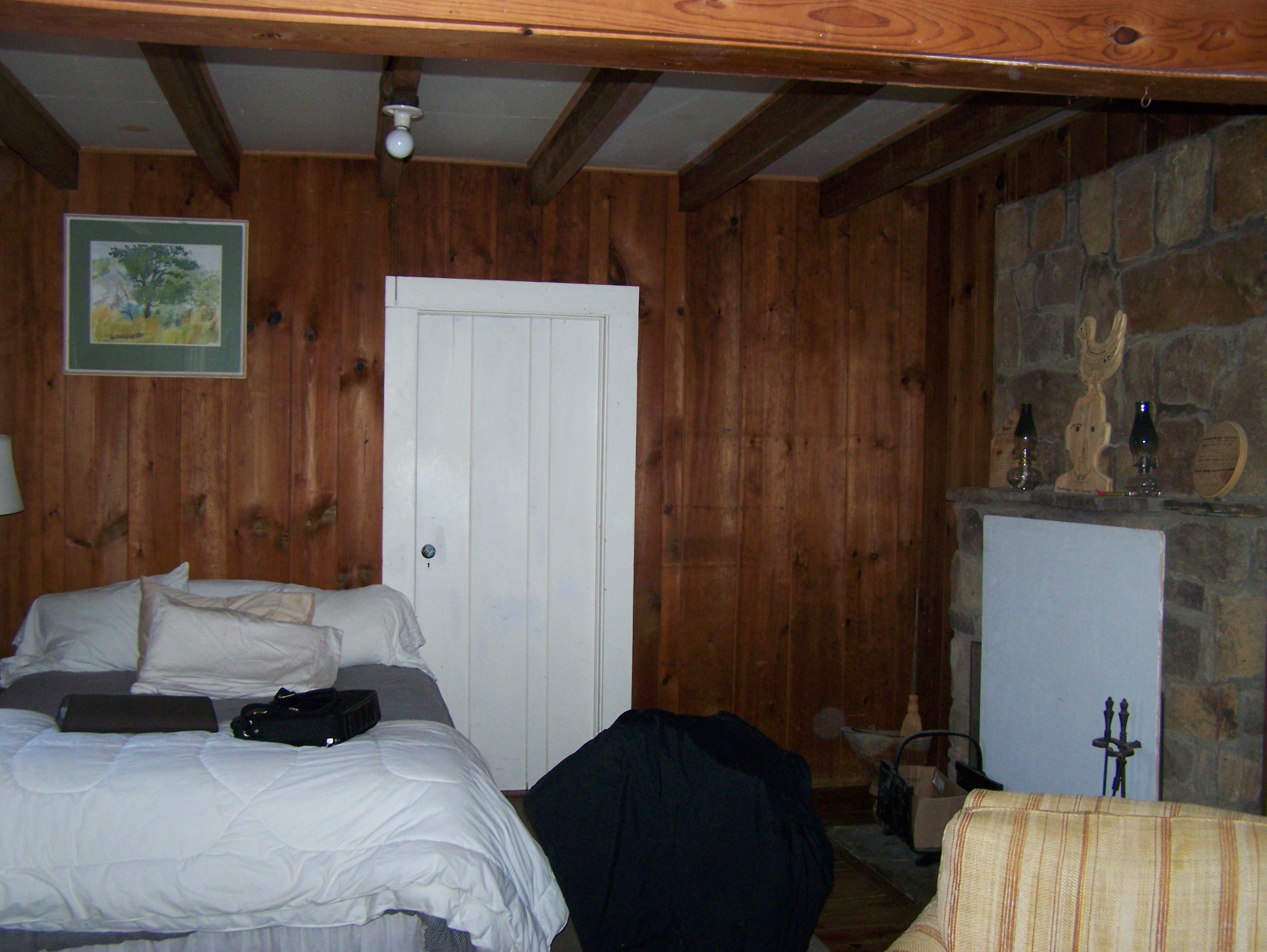
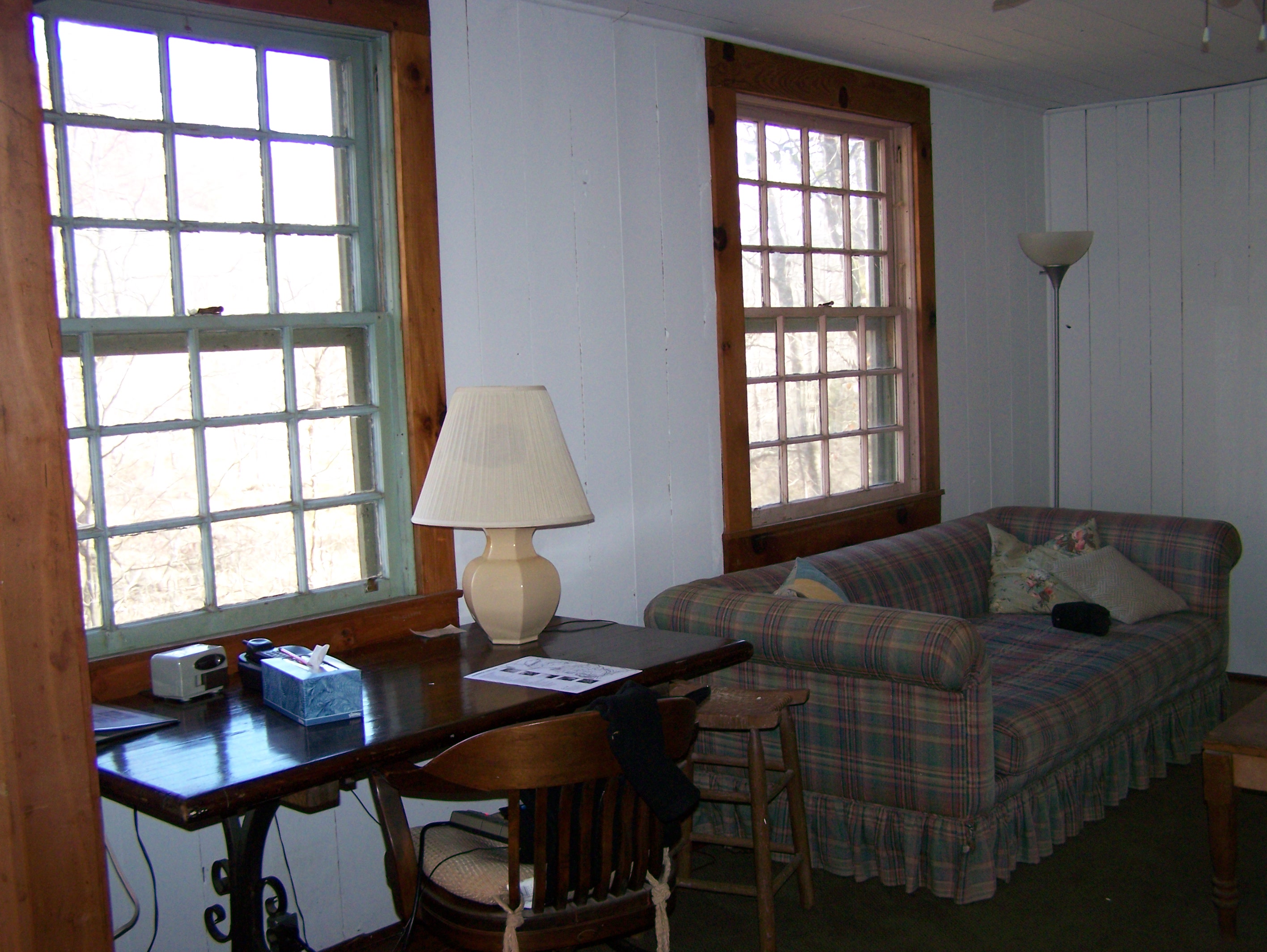
Hambidge is amazing. Isolated and beautiful, with hiking trails and waterfalls and wildlife. Each artist is in her/ his own cabin, and while I haven’t seen all of the other cabins, mine is magical. I have a bedroom, living room, workspace, dining room, and kitchen, all opened up to each other but partially separated from the rest of the space by a wall here and there. Just enough to feel cozy. I have a down comforter and a fireplace beside my bed, though it’s only really been cold enough to light a fire once. None of the cabins are close to each other, and it’s rare I see another person during the day. I do see the other writers and artists (there are eight at a time) at dinner. They are all well-read, smart, creative people, and usually our conversations drift to books or art or social issues. The food is wonderful vegetarian fare (thanks to Rae, the chef), and even the omnivores love it.
My days have fallen into the routine I’m most comfortable with when I’ve got long stretches of time to write. I wake up around 8:30 or 9, eat just enough fruit to knock the edge off my hunger, reread what I wrote the day before and make notes and minor edits, have an early lunch, and then tie myself to my computer for two or three hours working on new material. Mid-afternoon, I curl up on the fat comfy sofa and take an hour nap. Late afternoons are spent revising short stories I’ve had sitting in limbo for the past several months, or playing with flash fiction. Then at five-thirty or so I drive up to Lucinda’s Rock House, where there is internet and I can treat myself to half an hour of connection to the outside world before dinner. When I get back to my cabin around eight, I read (I’ve powered through three books already) or make more notes on ideas for the novel. Then to bed, usually much too late to be able to get up before 8:30 or 9 the next morning.
The quiet of the place is not for everyone, but it suits my need for solitude perfectly. Probably the hardest thing here is the disconnect from all the incessant demands of technology. No cell service, and internet service is available only in the main building. But once people get used to it (it usually takes a couple of days of withdrawal) the absence of email and texts and ringing phones is very freeing. Speaking of … excuse me while I disconnect
and go spend some quality time with my characters.




 Christy Strick
