What book changed your life?

What book did you read as a child that changed your life or the way you looked at life?  When I ask people this question, I find that almost  every reader has a special book or books that they have never forgotten.  
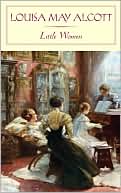
Little WomenLittle Women was it for me.  I identified with Jo.  When I was growing up, my divorced mother supported four children pretty much by herself, and we often struggled financially.  Little Women  showed me there could be dignity in poverty.  It was the book that made me want to be a writer,  that made me want to write books that speak to people the way Louisa May Alcott spoke to me.    
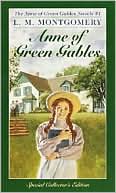
Anne of Green Gables

Shortly after Little Women came the Anne of Green Gables books.  Hm…  Books about another aspiring writer.  My grandmother bought me the whole series, and I still have them. They are some of my most treasured possessions.  I pull them down and read them occasionally when I want to remind myself how to create an emotionally engaging character.  My friend Hope loves the Anne books, too.
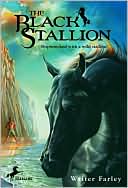
The Black Stallion

And then there were the Black Stallion books, which didn’t so much change my life as let me escape it for a while.  I used to pretend my bike was the Black and I raced against my friends on their bikes/horses . We had the perfect oval street that circled around a gully like a track, and every non-rainy day was Derby Day.  Of course, the Black Stallion and I always won. For a while I wanted to change my name to Alec.

When I think of those wonderful books and how important they were to an awkward, shy kid, it makes me want to touch a life like that.  Kudos to all the Children and Young Adult writers out there who are changing our children’s lives every day.

What book/books made a difference in your life?

No do-overs

All new writers send out work too soon.  I’ve read thousands of interviews with well established writers, and most all of them cop to having done it.  We are so anxious to have something fly that we shove it out of the nest before it has wings.  Even now, I have a hard time holding on to a story long enough to make sure it’s really really ready.  I get tired of it.  But when I get that feeling, I try to walk away from it for a while.  I sure don’t want a story that’s not good enough accidentally making it to print, where forever and ever people can read my less than worthy publication.

How do you know when something’s ready?  Well, revise and revise and then when you’re finished, revise some more.  Then put it away and a month or two later go read it again and revise one more time.  During this process you might want to get constructive criticism from unbiased sources, like from members of your writing group.  (Your mother and boyfriend are not unbiased sources)  I will swear by the difference a good writing group can make to your writing.

There are some stories out there that I’ve had published before they were ready.  At the time, I certainly thought they were ready.  Or at least wanted them to be, and convinced myself they were.  I’m not thrilled people can still find them and read them and judge me as a writer based on those pieces. 

I know one writer who has had a public and critically acclaimed book published, and when she’s doing readings from it she constantly revises her copy with a pencil.  That’s carrying it a little too far, I think.  Once it’s out there, I kind of feel like it belongs to the readers, not to me any longer.  Or not who I am now, but rather who I was back when I wrote it.  So I really don’t feel the need to change it.  I want to move on.

The Nobodies Album paperbook cover
The Nobodies Album by Carolyn Parkhurst

Which brings up a terrific book I read recently.  The Nobodies Album, by Carolyn Parkhurst.  About an author who revises the endings to all of her published books.  There’s a reason behind this, and a great story line, but part of the great fun of the book is that she includes the old endings and the revised ones.  Fun to read the difference.

But back to the point, this is a reminder to all those new writers out there.  Really, once it’s out there, it’s hard to take it back.  Make sure it’s the best it can be before it sees print.


Hell no to Facebook!

As most everyone knows, I’ve come late to the social media party.  After all, my website and blog just got started, and it was only a couple of weeks ago that I joined Twitter, a full three years after most of my writing friends.  There was no reason behind the delay other than that I am more interested in writing fiction than essays and non-fiction.  My main fear was that I would waste precious writing time on something other than my stories and my novel.  So far I’ve been able to balance the two parts of my writing life.  If there ever comes a time when I can’t, the blog and Twitter will go.

There’s a real downside to the blog and Twitter stuff, though.  Suddenly all the Facebook devotees out there assume that since I’ve started with Twitter, it’s just a small step to FB.  Well, let me assure all of you who keep telling me I have to be on FB.  I do NOT have to be on FB.  Let’s go ahead and get this out of the way now, one last time.  For all those reasons you give me why I should be on FB, here’s why I’m not:

  1. It’ll be good for my career.  Actually, the only thing that’s really good for my writing career is writing the best fiction I can write.  And revising it and revising it some more and then submitting it.  Period.
  2. I can keep up with friends and family, and they can keep up with me.  I know the phone numbers and email addresses of my friends and family.  Why do I need to stay in touch with them via public forum?  And if there are people who don’t have my phone number or email address, chances are I didn’t want to give them that information. 
  3. I’ll be able to find my best friend from third grade.  (dumbest of all) If I’d wanted to keep up with my best friend from third grade, I would have.  Just because someone was my friend when I was eight doesn’t mean I will have a damned thing in common with her 40+ years later.  And say that person wants to friend me and I don’t want to be her friend?  Then I’ll have to reject her.  Better for her to think I don’t know how to get in touch than to know that I do but choose not to.

But here’s my major objection to Facebook (apart from the ads).  People share way too much.  They say things they would say chatting with their friends over coffee.  You are not just talking to friends over coffee, folks.  You are putting things out over the big wide web that maybe you should keep to yourself.  Much of it is embarrassing, but lots of it is just plain boring and inane.  Lots of Twitter is boring and inane too, but it’s quicker to skim through to find the links you want, and people on Twitter don’t necessarily expect you to respond.  People who make remarks on your FB wall do.

So, unless something changes dramatically, don’t expect to be my friend on Facebook.  If you want to keep in touch, do it the old fashioned way.  Email me.