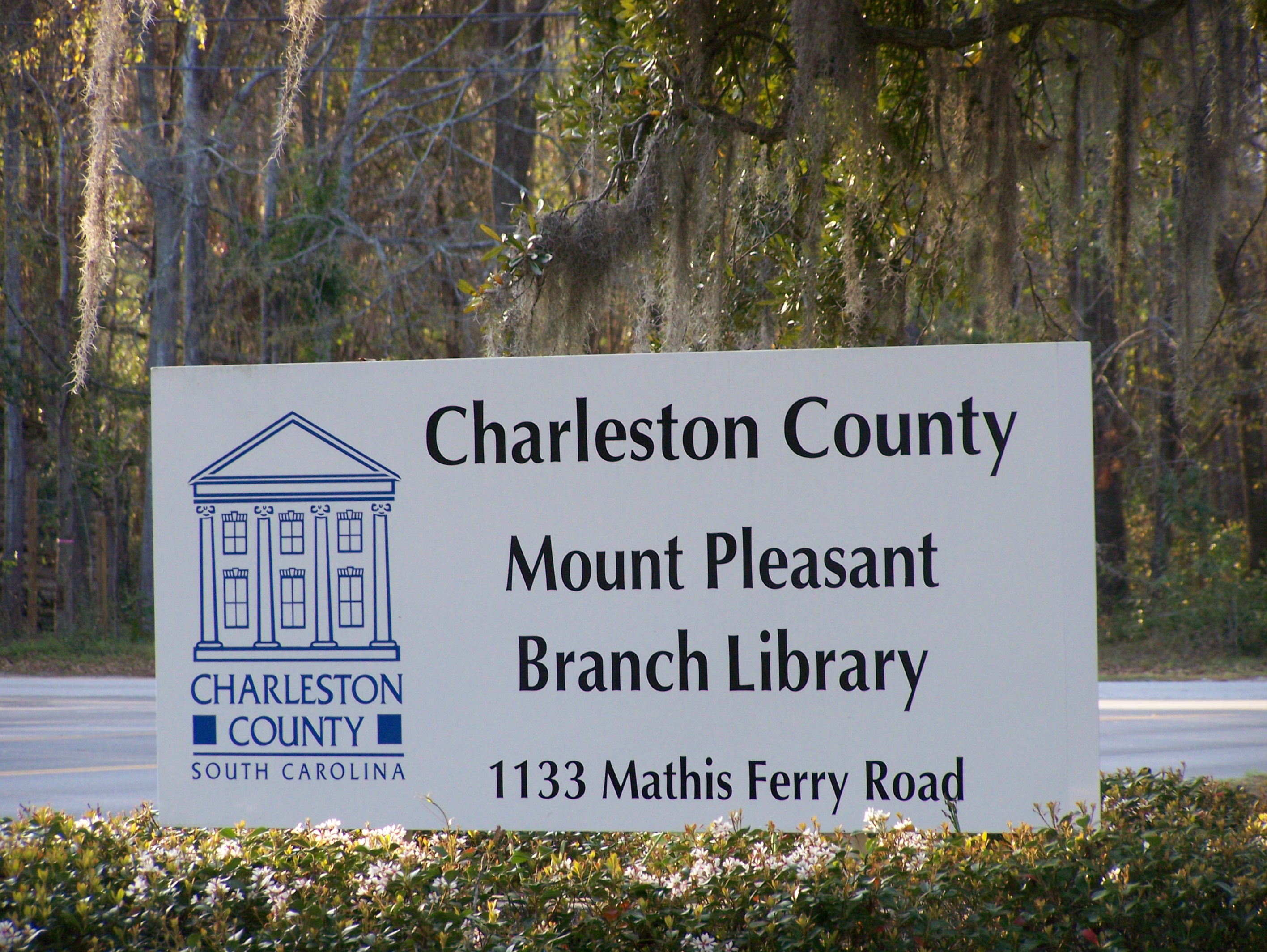
Library time

I spent a happy couple of hours in the Mount Pleasant library today.  Not for research, and not looking for any specific book.  Just to browse.  About my favorite thing to do if I can’t be on the beach reading.  And I came out with my arms piled full of books by Colson Whitehead, Margot Livesey, Penelope Lively, and Patricia Highsmith, among others.  No new books – I’m on a waitlist for a few of those.  Instead, in my stack are some I’ve been meaning to read, and some I didn’t realize I wanted to read until I saw them.

The library in Mount Pleasant is small and not particularly well stocked, but that’s OK.  There is a much larger library in downtown Charleston, of course, and they have a better selection, but the library in Mt P is less than ½ mile from where I’m living.  And Mt P can get the book from downtown, so I usually only have to wait a few days.

I have always been in love with libraries. When I was a kid, library time was magical and treasured.  I don’t remember exactly how old I was when I got my first card (my mother doesn’t either) but I know I was young.  Young enough that I had to prove I could read before they’d let me have one.  And I remember walking out of the library in Anderson, SC with as many books as they’d let me check out. Depending on who the librarian was that day, I might only be allowed to check out the number deemed appropriate for a kid my age, or I might get away with checking out a few extra if some soft-hearted book-lover sat at the desk.  And most all of the librarians back then were soft-hearted book-lovers.

Once upon a time I could rely on librarians to make book recommendations and steer me to information on pretty much any topic I was researching.  While I’m sure many people who work in libraries can and do still do this, I was shocked by my experience today at the information desk.  I was looking for The Talented Mr. Ripley.  I’ve never read it and have been meaning to, so I decided now was the time.  But I couldn’t find it on the shelves, so I went and asked for help.  When I gave the girl behind the desk the title of the book, she said, “Well, that’s a movie.  So you might look in the movie section.”  I assured her it was a book first.  “It was?” she said.  Then I had to spell Highsmith twice before she found it in the computer.

While I know Ripley is an old book and this girl was only 25 or so, I was still shocked she’d never heard of Patricia Highsmith or the book. It makes me sad.  I miss the lovely women (and they were always women) who knew where every book was shelved, and knew who wrote every one of those books.

Still, well-read librarians or not, I love the library, and have ever since I had to prove I could read.  And I love having a stack of books waiting for me.  Hm, which one to read first?

Submission 101

Talented, would-be-published writers tell me all the time that they have finished articles and don’t know where to send them, or that they have short stories collecting dust, or that they don’t think they are good enough to get published.  So, this is for all the writers out there who need some encouragement to send work out, or just need a kick in the ass.  Whichever way you want to look at it, here are some tips to increase your odds of success once you screw up the courage to submit your work.

1. Before you send it out, make sure it’s ready.  Don’t assume an editor will recognize the masterpiece buried under typos and grammatical errors.  There’s too much competition for you to think anyone will take work that’s not the best it can be.

2. Do your research. While you can’t read every magazine and literary journal out there, if you’re serious about being published, you’ll read the ones you’re submitting to.  Every editorial board has preferences for style and material, and the only way to get a feel for what they like is to read them.  You can pick up some from book stores, or you can order back copies from the journal’s website.  You might also check out Cliff Garstang’s blog, Perpetual Folly.  He’s reviewing some of the top journals in his “Year of the Lit Mag” series.

3. Study the submission guidelines for each journal. These guidelines are in addition to the manuscript standards you should already be familiar with – double-spacing, 10 – 12 point font, 1 inch margins, etc.  The guidelines will tell you things like maximum word count, whether or not they accept genres, whether they want snail mail or electronic submissions, and any other particular preferences they might have.  Take these seriously.  Why bother to send a journal a 10,000 word story when they don’t publish anything over 7500 words?  Geek that I am, I have a spreadsheet that lists journals I think might like my work (based on reading dozens), their submission periods, max words counts, how long they take to respond, and tons of other information.

4. Track your submissions. I use my handy-dandy spreadsheet to track when I send a story out, and when I get a response.  Because I also have a column with an expected response date, I can easily track when I need to follow up.  If you’re not as nuts as I am and don’t want to bother making a spreadsheet, check out duotrope. It’s a free and easy-to-use submission tracking website.  Whatever you use, make sure to track submissions.  There’s nothing more embarrassing than sending a story to a journal and realizing later that they’ve already rejected it once.

8. Don’t give up.  Few writers have their stories accepted by the first journal they submit to. If you get a rejection, send the story right out again.  I have a rule to get it back in the mail within 48 hours unless I decide it’s time for a major revision.

All of this takes effort, and lots of writers hate the submission process.  I happen to love it. I love research, and I love spreadsheets.  But more importantly, I love the challenge of finding the right home for my work.  If I really believe in a story, I owe it to that story to do everything I can to get it out into the world and off my desk.

So stop whining and start putting the effort into submissions that you’ve put into your writing.  You’ll increase your odds of getting that “We’d love to publish your story” email we all obsessively watch for.

Catch Me if You Can

In the past year I’ve spent time in four states: Virginia, Florida, SC, and Georgia. I have a suitcase that stays packed in case I decide to hop in the car for a road trip.

There are plenty of people who wouldn’t want the nomadic life I’m living right now. I have stuff scattered from Boston to Virginia to SC – my pictures are in Boston and Newport News, my mountains of books at a friend’s house in C’Ville, and my furniture has been in a storage unit for over a year. What I think I might need or can’t live without (books and writing files, mostly) I carry in the trunk of my car since I never know where I’ll be when I need them next. There are some mornings I wake up unsure where I am, at least for a second.

My lifestyle is hard for some people to understand, and it’s damned near impossible for government agencies. The government wants to be able to find me. Wants to be able to put the long finger of bureaucracy on my pulse at any given moment.

I don’t care about being a citizen of one place, don’t want to have to pick. But I have to have a driver’s license in only one state and a permanent address and all those things that supposedly make us adults. So I have checking accounts in both Virginia and SC, addresses that flip-flop back and forth depending on where I think I’ll be the longest, and library cards in Charlottesville, Mount Pleasant, and Key West.  I have grocery store cards for places in cities I’ll probably never go to again.

The reason I’ve been living like this is so I can pick up and go when I want – to residencies, conferences, special events. I like having options.

But now it looks like I’m back in Mount Pleasant for the foreseeable future. I’ve followed my passion, and this is where it’s led me. I still plan to go to residencies, and conferences, and who knows where else, but it’ll be nice to unpack my files for a bit. Big Brother should be happy. Only don’t tell him, I’m not taking my stuff out of storage yet.